As a young boy I had a book with stories from all over the world. It had a drawing of a lone fur trapper in the woods, staring at the northern lights sky. I loved that drawing. Such wildness, such loneliness and such beauty! I dreamt of being in the wild myself and seeing the aurora borealis. But I had visited Iceland in summer once, with 5 days of just clouds and rain and wind (We were camping then, my daughter and I, and after 4 days of rain we fled into the first hotel we could find to get dry. Despite the rain and the clouds and the wind it was a great holiday, for even when it rains Iceland is really beautiful).
So I hesitated. What were the chances of going in winter and having both an active aurora and a clear sky? For years I didn’t dare to take the risk and buy a ticket.
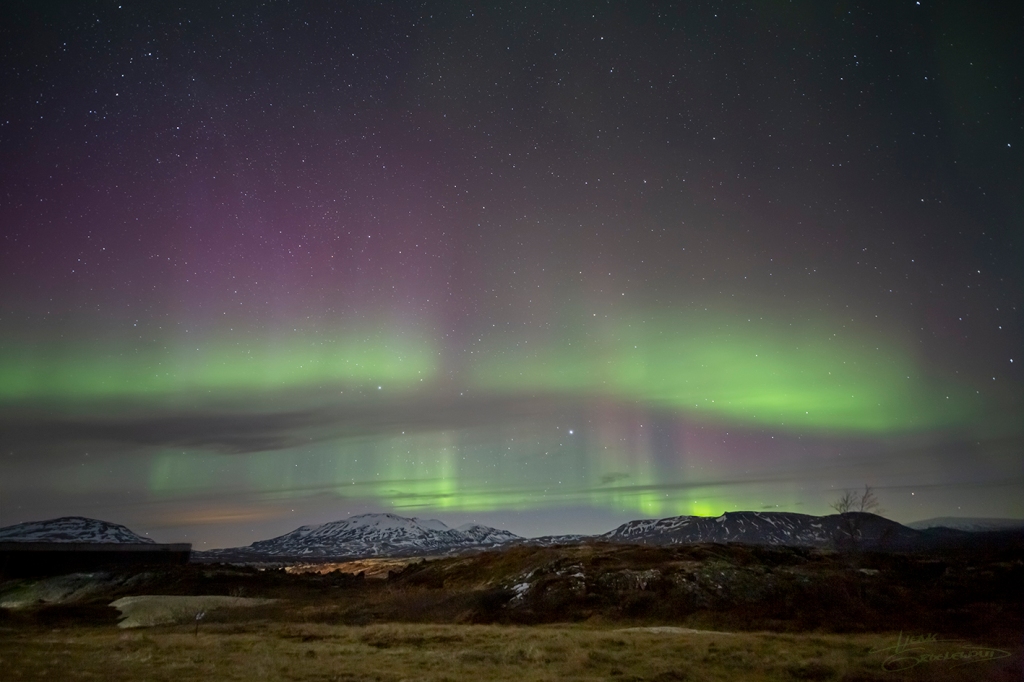
Until last November, when I realised that if I didn’t try, I would surely never see it. I bought a ticket and… well, see for yourself.
There’s no need to go to a special dark place to see the aurora. You can see it right from the city. Reykjavic for instance, or more precisely: the bay of Kopavogur.
So I visited his grave in Vienna. That is to say: He was buried here at the St. Marx cemetery, but the exact location is a guess. Buried in an unmarked grave, according to the rules and habits of that time. Probably his bones were dug up after ten years to give room to other deceased. But it is nice to think that he was laid to rest here, at this memorial.
“Do you think this is it?” Approaching the Mozart house at Domgasse 5 in Vienna, Austria. But no, the house where Mozart lived is just around the corner. The house is a museum, and you can walk in the rooms where you he and his wife lived from 1784 to 1787. He wrote the world-famous opera “Le Nozze di Figaro” there, and three of the six Haydn Quartets.
Well, this is it then. The Mozart house. Domgasse 5 in Vienna, Austria. Incredible that he has walked in the same streets, through the same door over the same stairs. With a little fantasy you can walk together.
View from his house. This he saw when looking out of the window, thinking what the violins should play next.
I did it. I created Art with a capital A, and it hung in a museum. A dream come true. In the Belvedere museum in Vienna, Austria, amidst all grand names of art history.
In fact I completed the work Quasimodo of Franz West. “The title of the installation, “Quasimodo” by Franz West, can be translated as ‘the Incomplete’. Consisting of a forged iron hook and a video, this only becomes complete when the hook is hammered into a wall and objects – or in the worst case one’s self – are hung up on it at will, according to the artist…”
So I asked the attendant if I was allowed to hang up something there. He chuckled shyly, not really knowing how to react. “Oh dear… I just started working here. But I guess… if I you read what the artist says, the idea is to do just that…”
I smiled at him “I totally agree. You are so right, and I would really love to do it!”
While the other visitors watched in a bit of a shock, I hung up my camera. Like a statement: Look! I am temporarily pausing my photography as a tribute to the artist and his art. Of course by hanging up the camera I prevented myself from taking professional high quality images. Thereby strengthening the incompleteness, as I was powerless and empty handed as a photographer. I could only take a snapshot with my mobile phone. For me, this snapshot now has become a piece of art in itself, mirroring different layers over the original work.
I call it: Sicut modo. So happy with it!
Art and adoration. I went to Vienna just to see this picture. Recently I visited the Klimt experience at the Fabrique de Lumières in Amsterdam. That raised a few memories: The shop in Amsterdam so many years ago when I was a high school teenager. The cards I found there – all about Jugendstil and fairies and so. And this one that I immediately loved.
So I decided to go and see it. No reproduction can give the feeling of the real thing. I tried to take pictures of the shimmering gold and silver particles, but it’s impossible. You have to see it for yourself. In the Belvedere museum in Vienna.
Art touches one´s sense of beauty. Museums always tickle my creativity and wake up my inner muse. There is so much beauty all around! Just a glimpse out of the window tells me there is a world full of splendor waiting to be transformed into masterpieces. And after leaving the building, I feel enlightened and ready to create the most stunning art myself. View of the Naturhistorisches Museum in Vienna through the blackout screen of the Kunsthistorisches Museum Wien.
View from the Albertina museum in Vienna. Wherever you look, the world will show beauty.
It’s definitely not only the paintings that you should see in the Museum of Art History in Vienna. This is a view of the restaurant…
You just cannot not look up here. Is to too much Baroque here in the lower Belvedere?
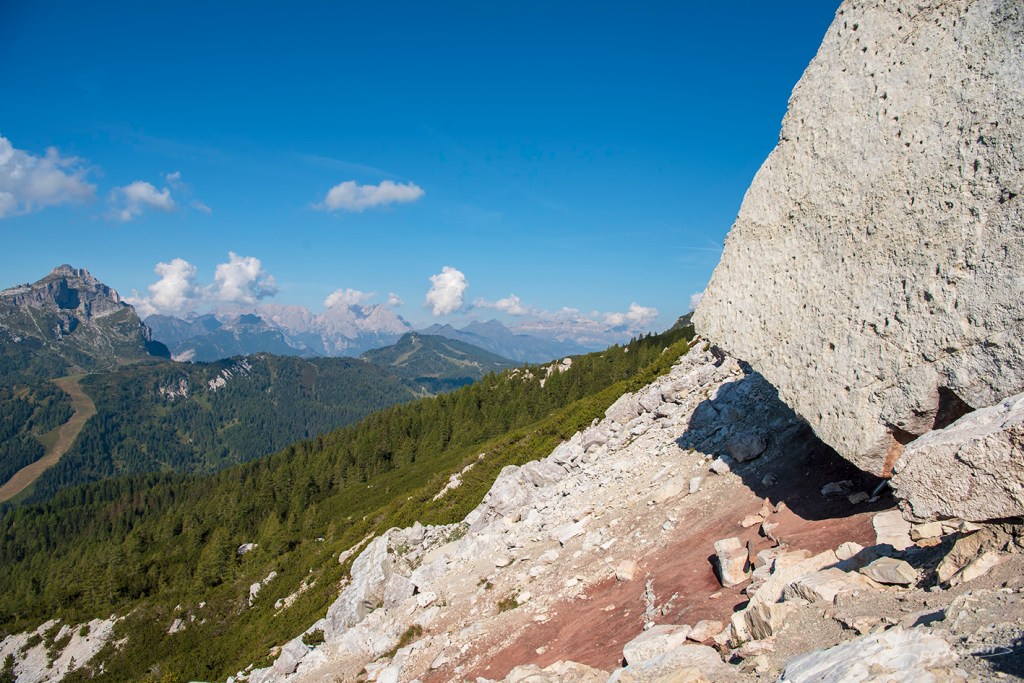
Let me take you to another magnificent place with dinosaur footprints. Above is the breathtaking view from Monte Pelmetto in the Italian Dolomites.
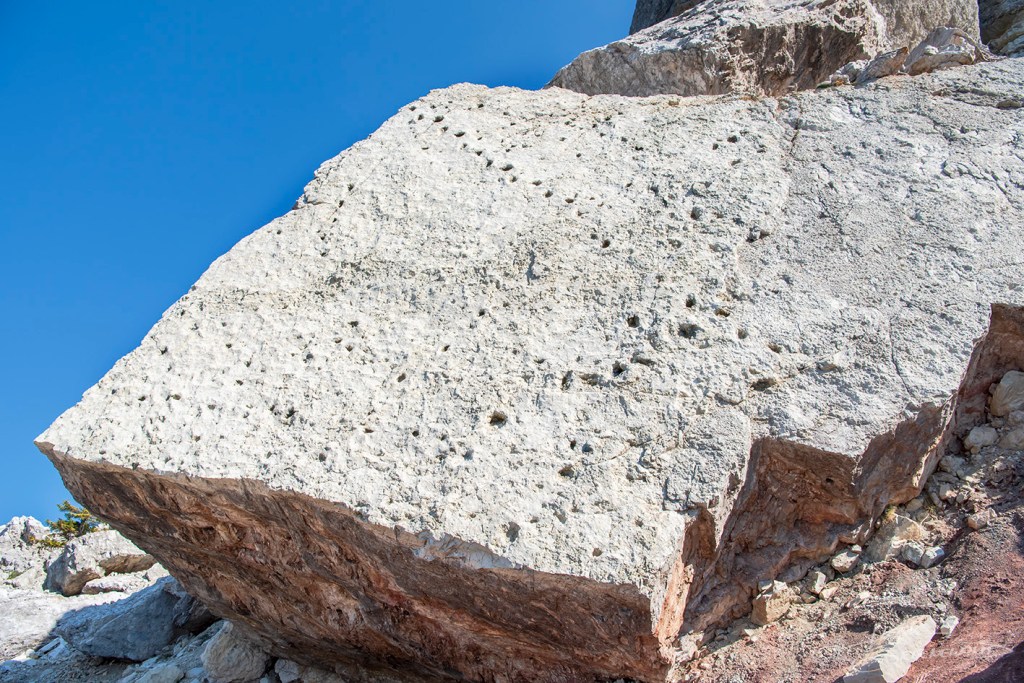
Turning a little to the right youy see a rock that broke off from Monte Pelmetto and came tumbling down. Look carefully! Do you see the tiny dots?
These prints are even older than the prints from Portugal. They date back to some 220 million years ago, the Triassic period, when the mountains still had to born and this was a flat and muddy area. Three different species have left their marks here. According to sources I cannot verify these were probably Ornithischia, Celurosauri and Prosauropoda.
A special place in the Algarve is Salema Beach, Praia da Salema, near Vila do Bispo. There you can find well preserved dinosaur footprints right at the beach. As you can see, the toes are round and without claws, which indicates that these are the prints of a herbivore, an Ornithopod, a bit like an Iguanodon.
It is estimated that these prints are roughly 130 million years old, dating from the Early Cretaceous. Standing in these footprints of dragons long ago spurred my imagination with fantasies of time machines and walking between those animals in another era.
Let me show you one of the magnificent beaches in the Algarve! Lovely to spend some time here, in between the chase for dinosaur prints at Salema.
Incredible to witness these dinosaur tracks and imagine how some 130 million millions years ago, huge lizards roamed this place. Salema Beach has more footprints, but they are well hidden. You´ll probably need a local guide to help you out, for even if you are standing close to these vertical rock formations the prints are difficult to see. António Alfarroba pointed them out. As you can see this one does have claws, so it must have been hunting for prey here. I´m afraid I haven´t been able to find out the exact species – if you do know it, you’re welcome to mention it.
Going back down memory lane. Huge flocks of pictures are quietly scratching my hard drive. It’s time set some of them free and let them fly out into the wide wild world. Starting with the Algarve, Portugal.
First one above is the lighthouse at Sagres. Suddenly you’re in an Old Testament scene. A goat herd walking home after sunset in Vila do Bispo
Sunset at sea through a deserted customs building in Vila do Bispo
Sunset ´on the rocks´ near Atlantic ocean in Algarve, Portugal
Algarve beach in twilight after sunset
Same coast from a different point of view and way, way after sunset
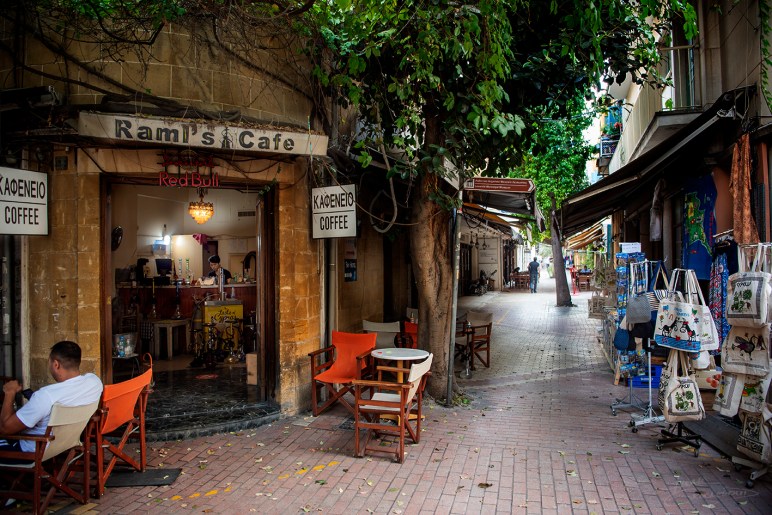
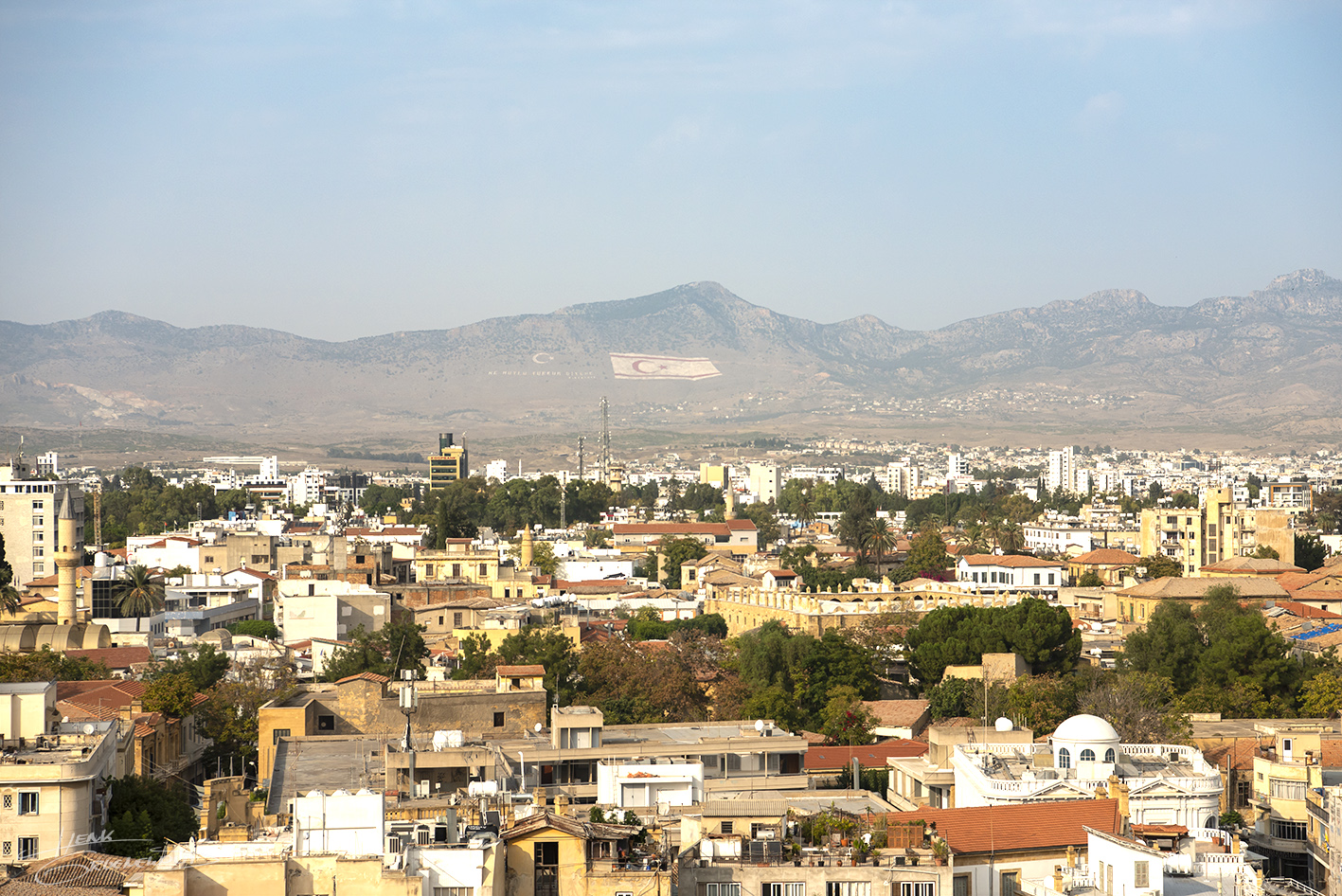
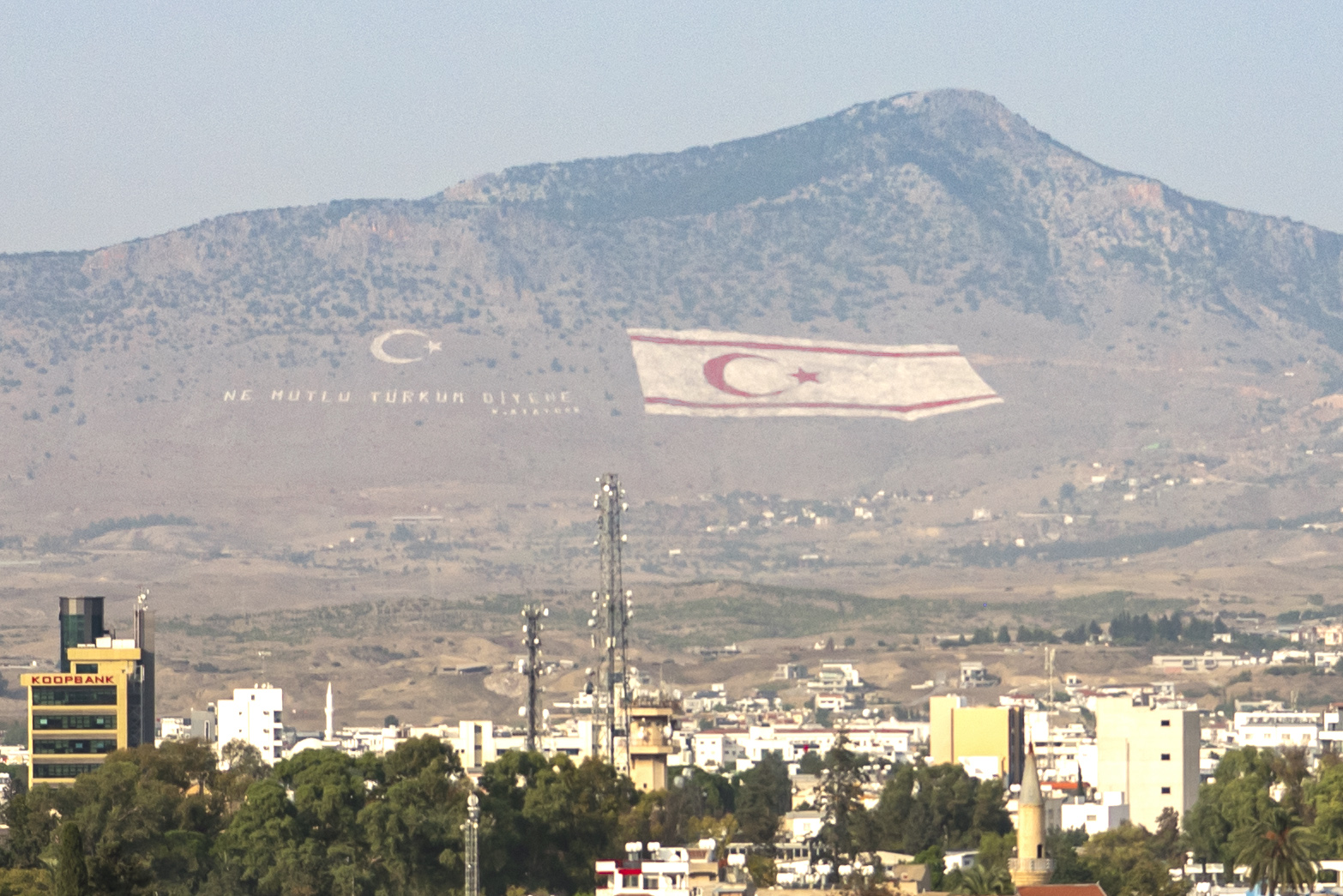
Back to Nicosia. So there was this war, and the division of Cyprus in a Greek and a Turkish part. Terrible event, I really don´t understand why people feel the need to start wars. What I do understand, is that crossing the border in the streets of the divided city of Nicosia now had become a major tourist attraction. And that flags underline the national identity everywhere. On both sides.
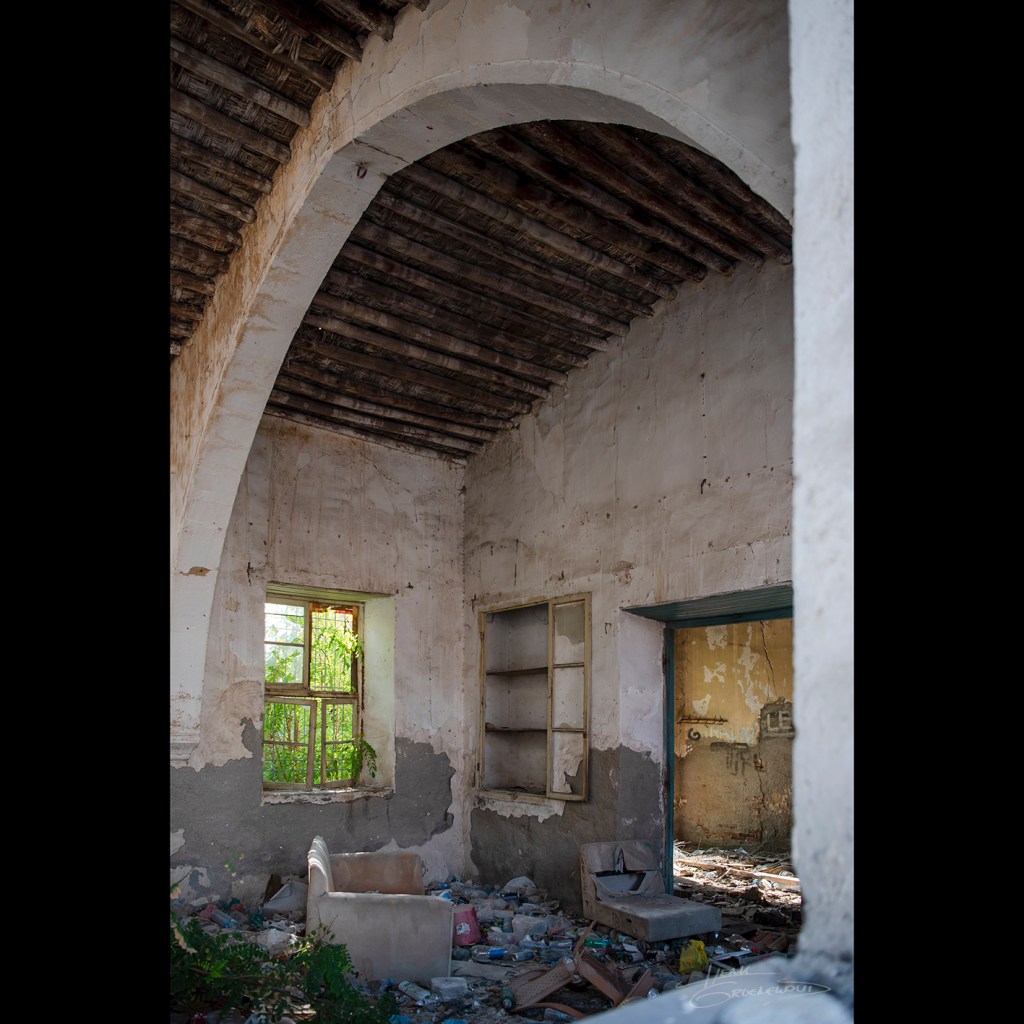
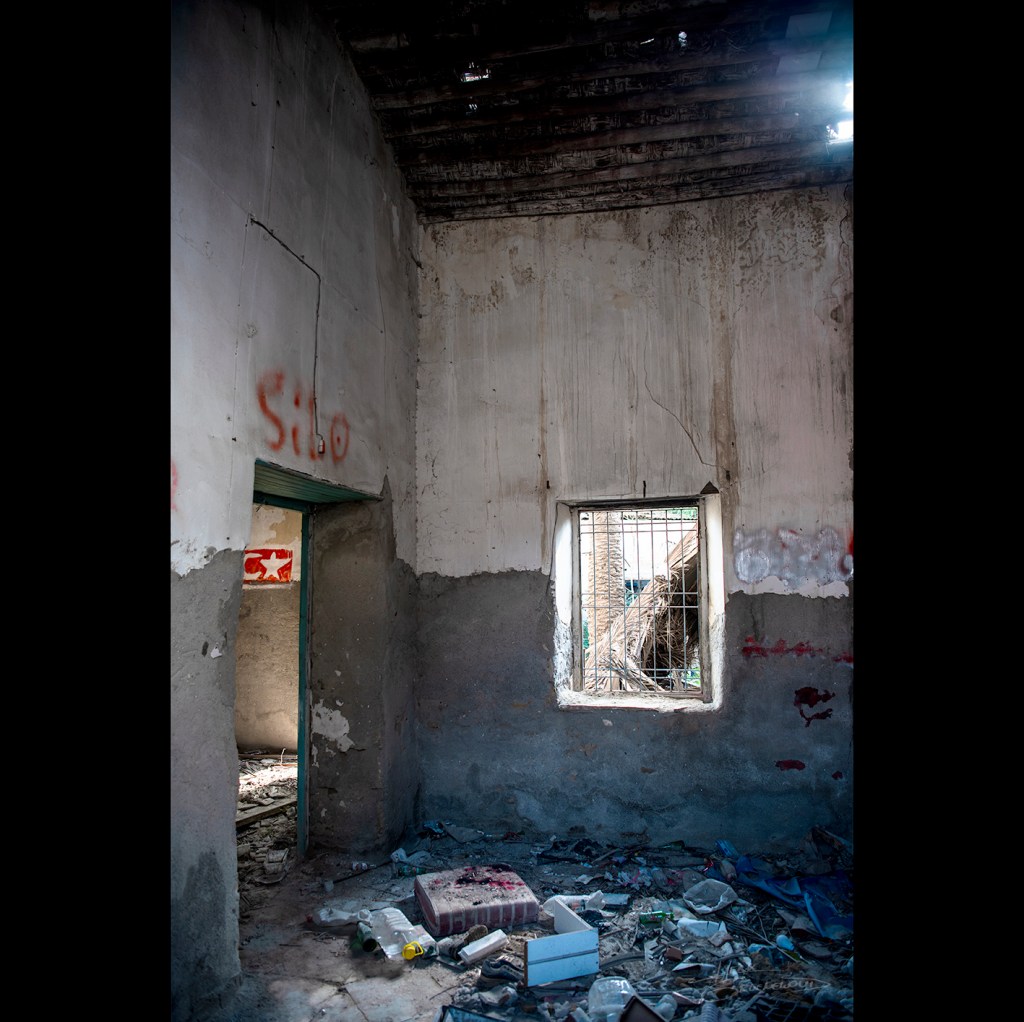
The Turkish side of the city definitely looks poorer than the Greek side. Abandoned houses create an urbex atmosphere of mystery, lost dreams and desolation.
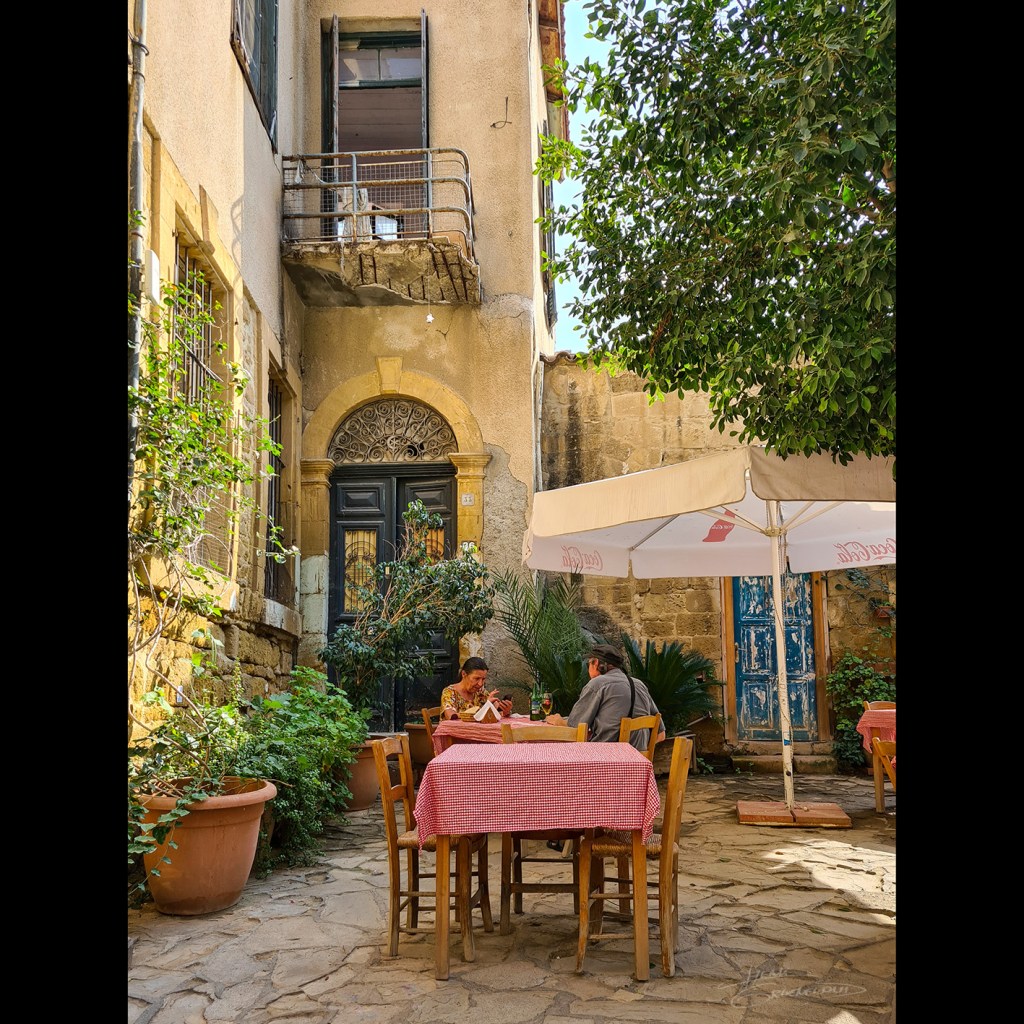
Then again… this Turkish side of Nicosia also has its charms, with summer holiday feelings on beautiful terraces.
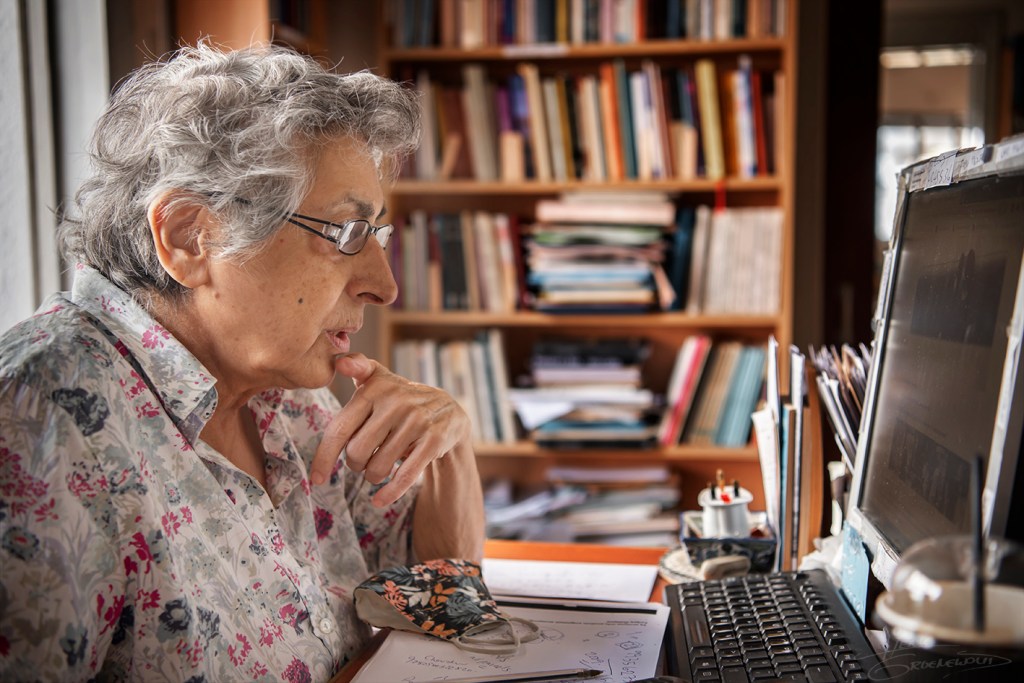
So we went to the Moufflon Bookshop at Pantazis Court in Nicosia to get some local books. Tugged away in an apartment building, rooms filled to the top with books on all imaginable subjects and with the most friendly and helpful bookstore keeper one could imagine. Loved her, and just had to take her picture while working.
Enough Cyprus for now. It’s time for some new adventures.
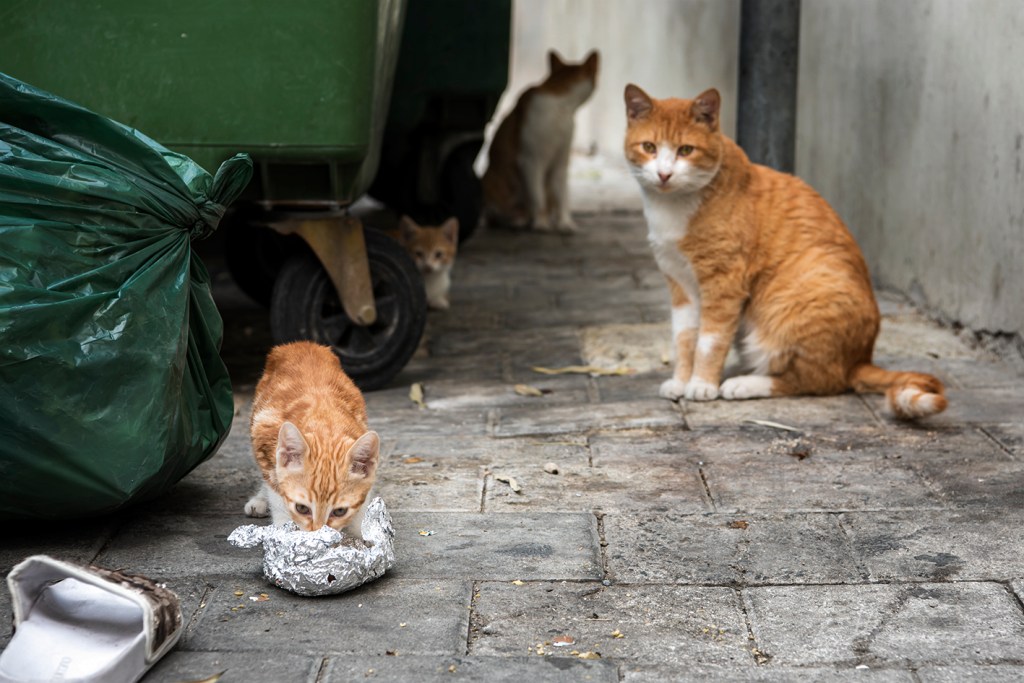
Cats everywhere in Nicosia. Mainly stray cats. Plenty of bowls with cat food and water in the streets, but the cats know exactly where to find a decent meal.
Learning to become streetwise. You have to know the value of waste containers.
Yes, life’s good for cats in Nicosia. No worries. Plenty people to pick up the task of feeding.
At home, cats already have that aristocratic attitude. But here, you truly feel their royal origin.
After the hailstorm Aphrodite showed her kindness. When we drove back along the coast, right at the place where according to the legends she had come ashore so long ago, she surprised us with a stunning sunset. Aphrodite’s rock, near Paphos, is a mythical place. It is said that if you swim around the rock, you will find true love. I’m afraid I only read that the next day…









 De Portrettenmaker