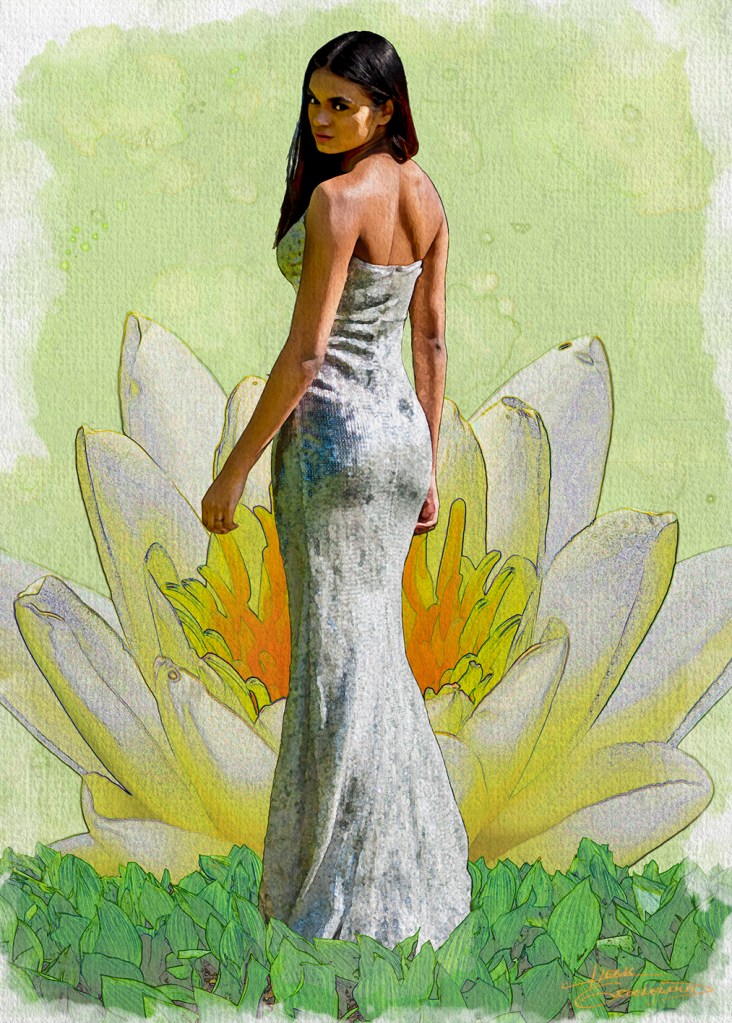
Floating away into the wonderful world of Jugenstil and Art deco. That is another way to go back in time. I love this period of more than a century ago, when books were written with words that had a life of their own and paintings offered a dreamy world where miracles were just about to happen. This portrait was taken almost two years ago, and needed the time to grow into this aquarel style
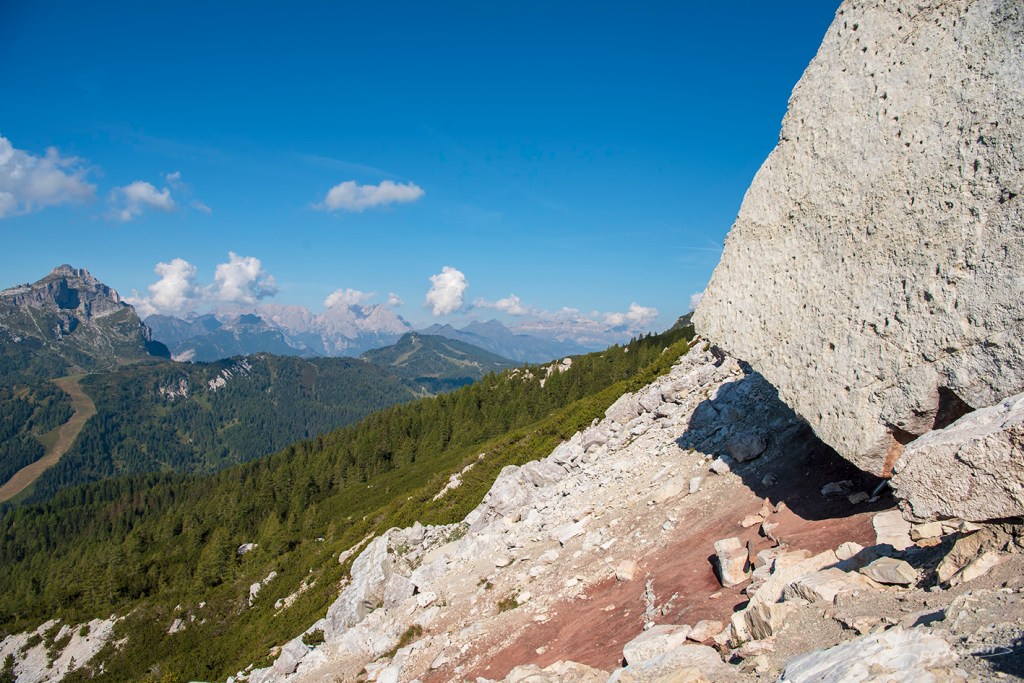
Let me take you to another magnificent place with dinosaur footprints. Above is the breathtaking view from Monte Pelmetto in the Italian Dolomites.
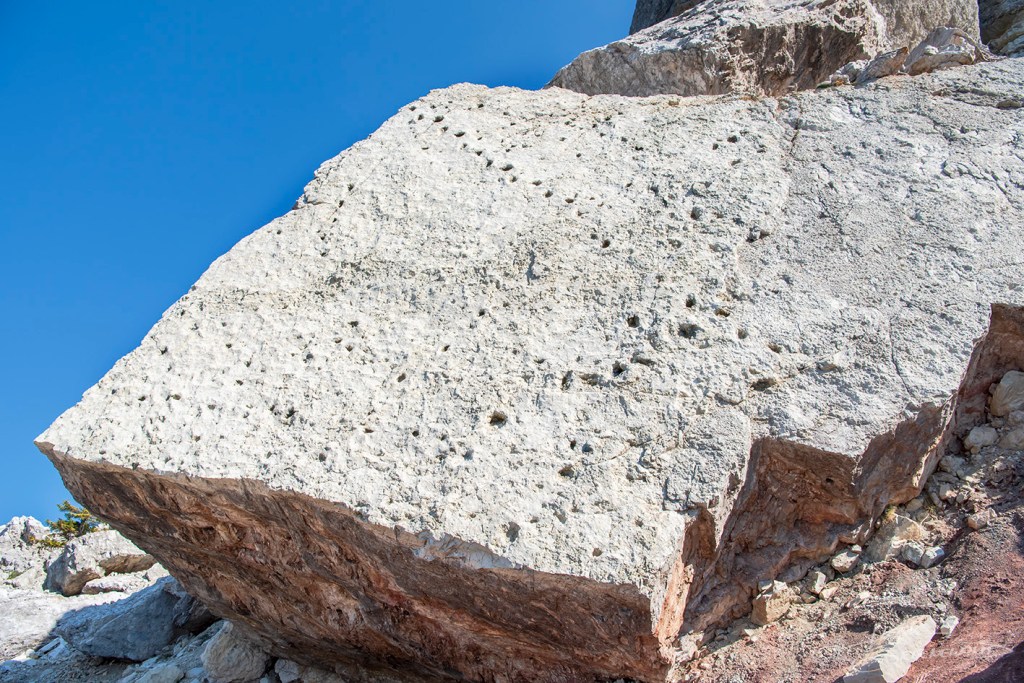
Turning a little to the right youy see a rock that broke off from Monte Pelmetto and came tumbling down. Look carefully! Do you see the tiny dots?
These prints are even older than the prints from Portugal. They date back to some 220 million years ago, the Triassic period, when the mountains still had to born and this was a flat and muddy area. Three different species have left their marks here. According to sources I cannot verify these were probably Ornithischia, Celurosauri and Prosauropoda.
A special place in the Algarve is Salema Beach, Praia da Salema, near Vila do Bispo. There you can find well preserved dinosaur footprints right at the beach. As you can see, the toes are round and without claws, which indicates that these are the prints of a herbivore, an Ornithopod, a bit like an Iguanodon.
It is estimated that these prints are roughly 130 million years old, dating from the Early Cretaceous. Standing in these footprints of dragons long ago spurred my imagination with fantasies of time machines and walking between those animals in another era.
Let me show you one of the magnificent beaches in the Algarve! Lovely to spend some time here, in between the chase for dinosaur prints at Salema.
Incredible to witness these dinosaur tracks and imagine how some 130 million millions years ago, huge lizards roamed this place. Salema Beach has more footprints, but they are well hidden. You´ll probably need a local guide to help you out, for even if you are standing close to these vertical rock formations the prints are difficult to see. António Alfarroba pointed them out. As you can see this one does have claws, so it must have been hunting for prey here. I´m afraid I haven´t been able to find out the exact species – if you do know it, you’re welcome to mention it.
Something completely different. Bread. The very first I ever baked, and it means so much to me! You have no idea. I took a huge risk given the visitor I expected. Simple recipe: whole grain flour, yeast, water and the simplest oven you can imagine. And it worked! It’s like magic.
Lovely to see the first ones of the year. In the backyard here in Hollandsche Rading, the winter jasmine is abundantly flowering.
Seeing this I realised I desperately need more yellow and summer colours. So this one is of a summer that feels so long ago.
Last one is of a visit to the Museum Voorlinden in Wassenaar. There are a few items on permanent display that bring out the inner child in everyone – at least, they definitely did in me. Like Leandro Erlich’s swimming pool, Ron Mueck’s Couple under an Umbrella, the Open Ended maze of Richard Serra and the tiny elevators of Maurizio Cattelan.
At the moment there is an exhibition of the Italian artist Guiseppe Penone, who works with natural materials like trees and marble and leather, using the objects as a kind of memory or footprint of what has been. If you allow your mind to wander in his world, thoughts of interconnectedness of all visible and physical objects come up, of memories in the physical world and how we give meaning to what we experience with our senses.
This picture below is of Tiger, tiger, tiger; the hidden tigers at the bottom of porcelain of the Ming Dynasty of Ai Weiwei.
Peter Westenbrink from Utrecht is an extraordinary artist. Right now his art is flying in orbit around the globe in the International Space Station, where a box contains numerous small pieces of art, made by artists like Peter.
He asked me to make a poster of him and his art. The concept he created himself, in the style of his other works (take a look at his website www.boutkunst.nl). I merely did the handwork: the photography and the editing in Photoshop.
The objects are a reference to the first word he learned to read at school. The teacher had these wooden tablets with images and a word, like the one on the picture (which in reality is approximately 50 cm in length), and the first one was: Moon! He transformed that idea in a piece of art the size of 1 cubic centimetre, the maximum size. All art in the space station will return to earth later this year, and after that another mission awaits. The aim is to go to the very moon itself, to create the first art exhibition on the moon. Lots of arrangements still have to be made with NASA and all, but the goal is clear. You can see it hanging in the sky every day.
Addendum Just got a message from Peter: “Coincidentally, the work of art (along with 63 more) returned to Earth today (January 11). At 11:19 a.m. our time, the space capsule splashed into the Gulf of Mexico, off the coast of Florida. The attached photo was taken at the landing site, shortly before landing on 4 parachutes. You see the spacecraft falling from the sky like a fireball (heat is released due to the friction with air particles in the atmosphere).”
Going back down memory lane. Huge flocks of pictures are quietly scratching my hard drive. It’s time set some of them free and let them fly out into the wide wild world. Starting with the Algarve, Portugal.
First one above is the lighthouse at Sagres. Suddenly you’re in an Old Testament scene. A goat herd walking home after sunset in Vila do Bispo
Sunset at sea through a deserted customs building in Vila do Bispo
Sunset ´on the rocks´ near Atlantic ocean in Algarve, Portugal
Algarve beach in twilight after sunset
Same coast from a different point of view and way, way after sunset
A few weeks ago a fellow photographer from Amersfoort gave a presentation on Saul Leiter. Famous New York fashion photographer. Besides his professional work he did a lot of street photography. Educated in the arts and painting, he was looking for a dialogue between colour and remarkable compositions. People are always present in his work, even if it is just a hand or a foot. At first glance, many pictures seem failed, for the main subjects are often only partly visible or blurred. Then it starts to dawn on you. His aim is not to get a nice picture of a person, or a perfect eye-pleasing frame. His aim is to create space, tension, contrast of light and a clash of colours.
So on a rainy night I went out to the city closest to Hollandsche Rading, Utrecht, to try and look with different eyes. Not his eyes of course, for his life was completely different from mine. But my eyes, trying to look as a child to lights, colours and people. The result is a kind of impressionist winter series.
There it was: the red umbrella, so often present in Leiter´s New York pictures.
End of year always makes me a little emotional. Thinking of what has been achieved, and what lies ahead. Personal stuff, like family, health, growth and decay. Big, very big stuff like the war of Russia in Ukraine, abuse, suppression, the energy crisis, the biodiversity crisis. Might feel a bit awkward to wish everyone a merry Christmas. On the other hand: these are the darkest days, and isn’t Christmas all about hope? In the midst of the dark a new light comes, a new beginning of warmth and life. And hopefully also peace.
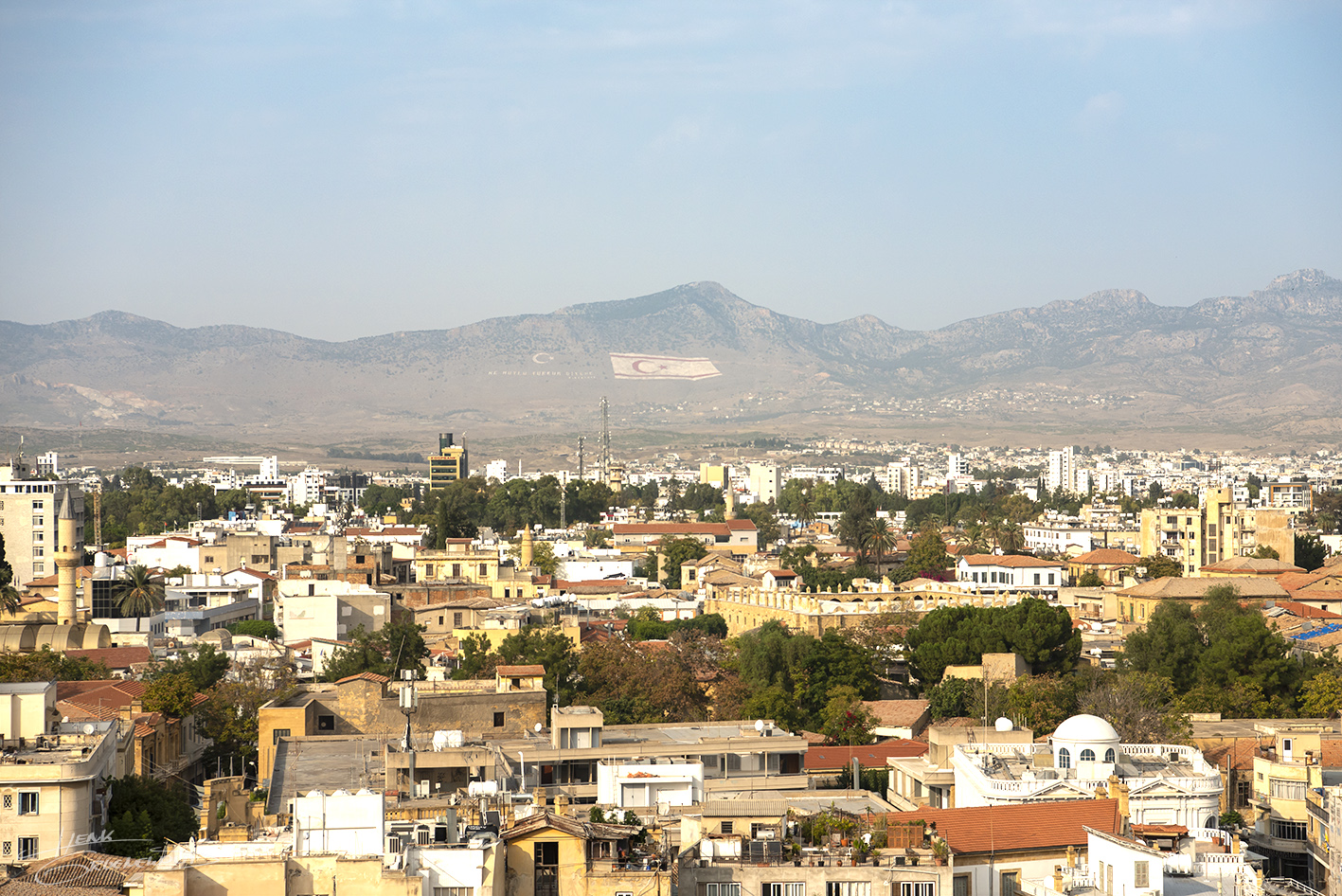
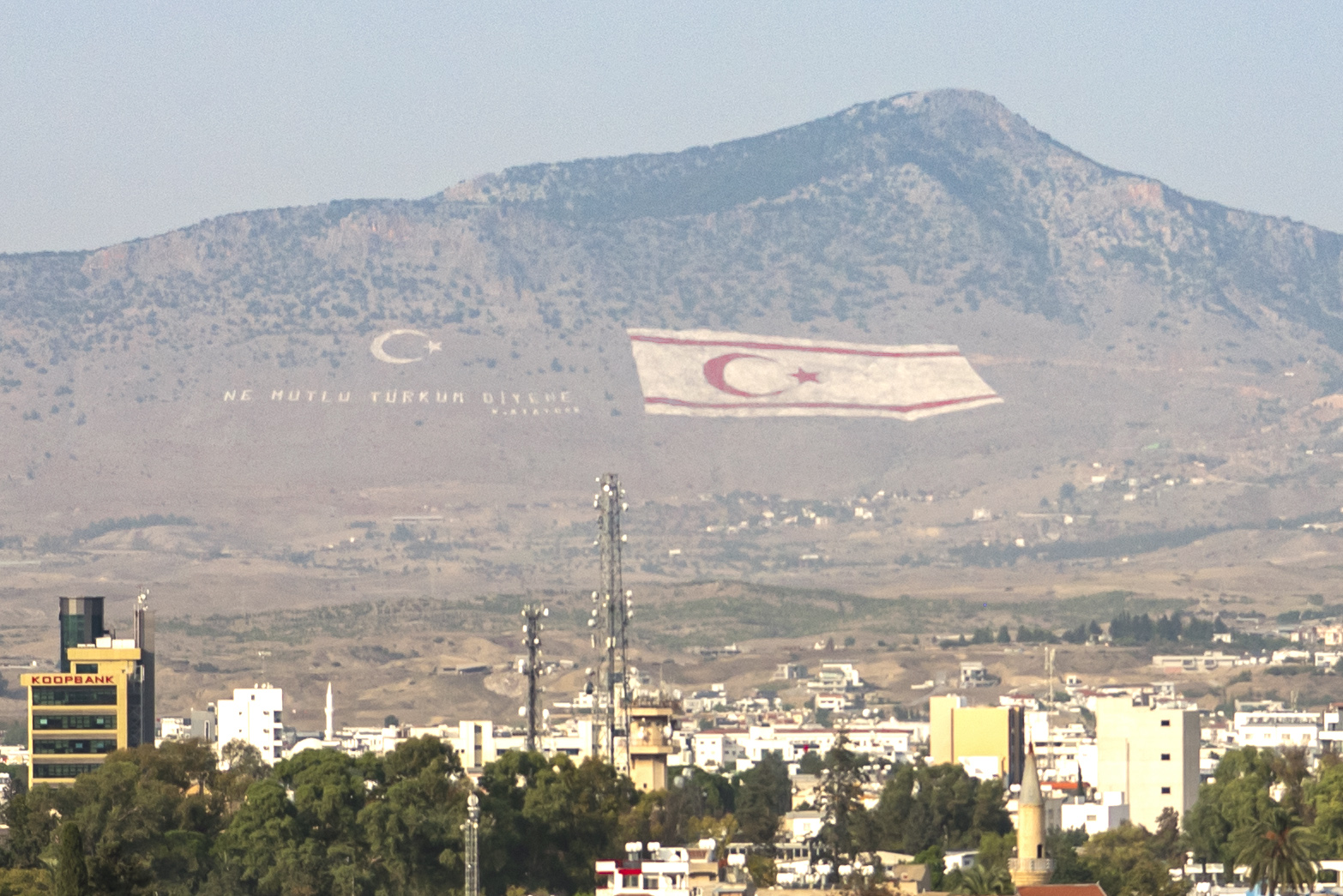
Back to Nicosia. So there was this war, and the division of Cyprus in a Greek and a Turkish part. Terrible event, I really don´t understand why people feel the need to start wars. What I do understand, is that crossing the border in the streets of the divided city of Nicosia now had become a major tourist attraction. And that flags underline the national identity everywhere. On both sides.
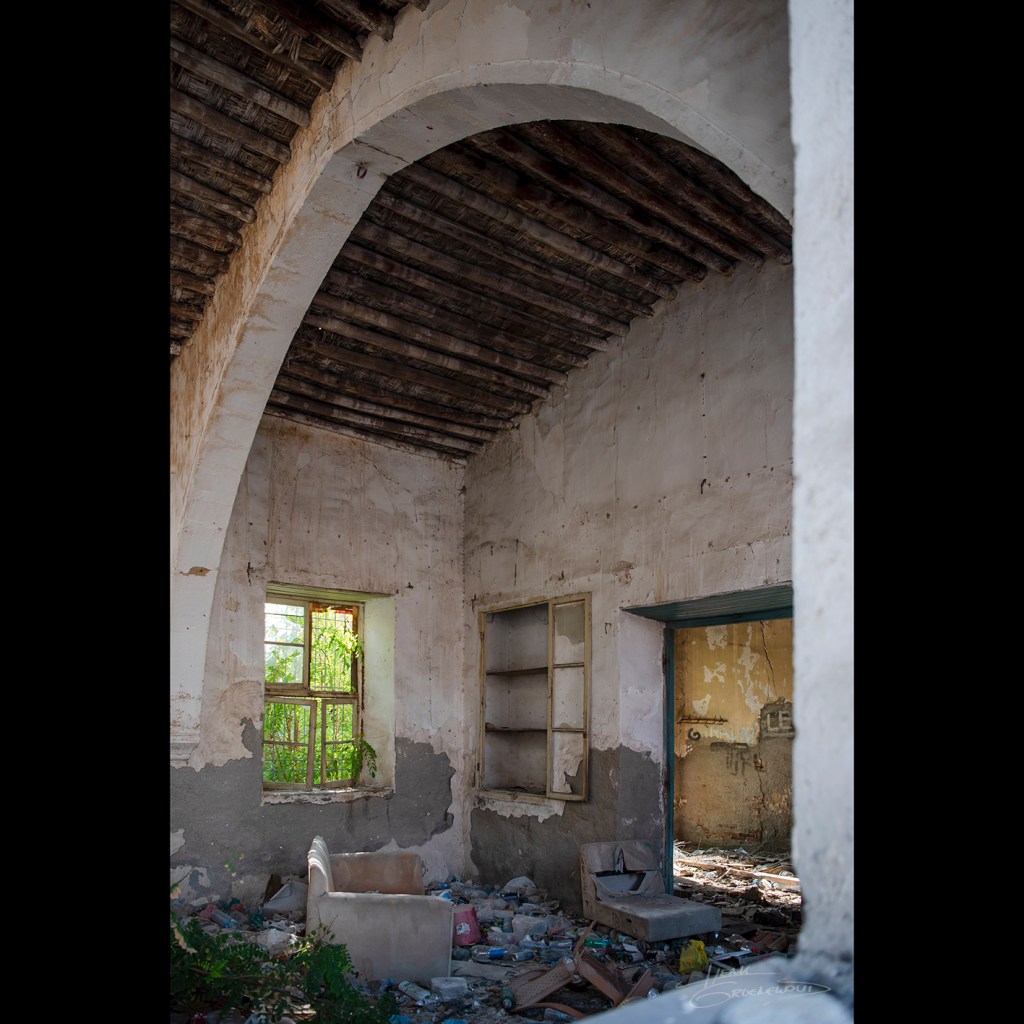
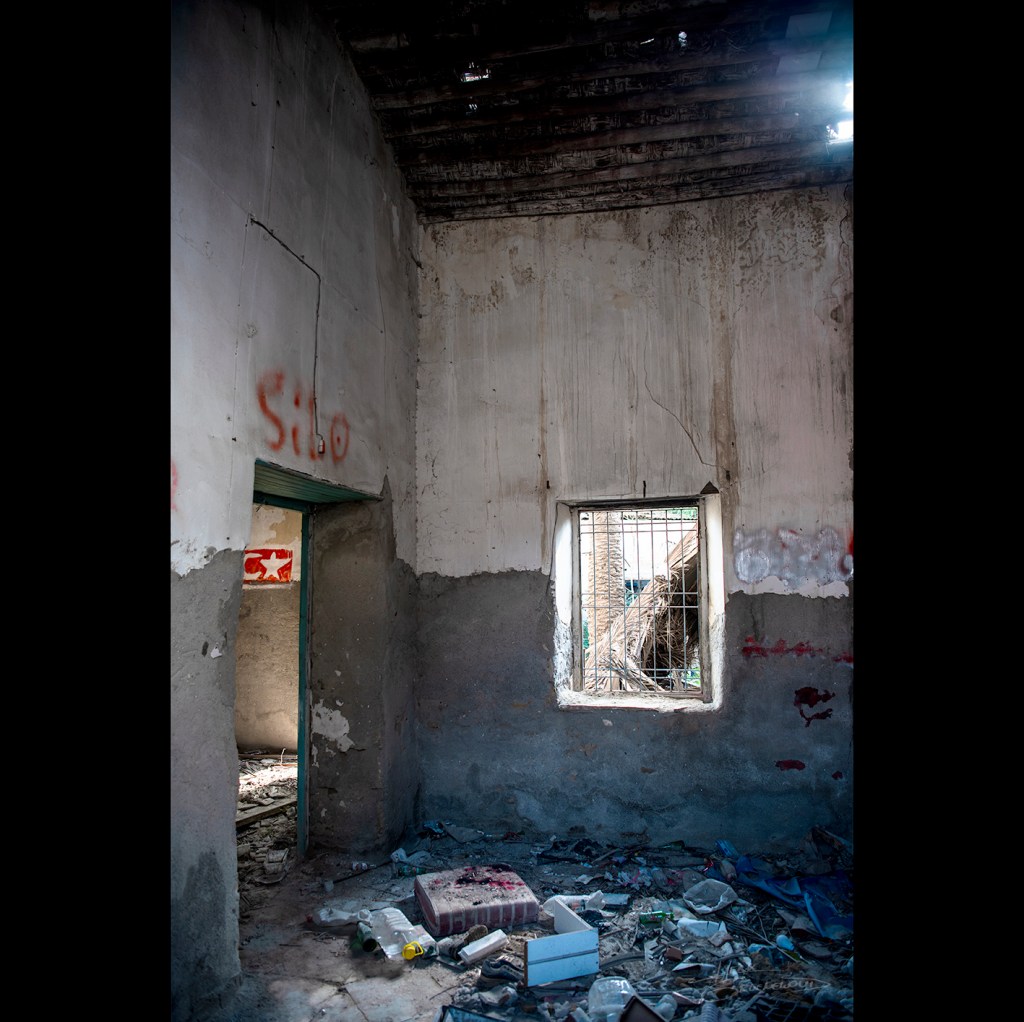
The Turkish side of the city definitely looks poorer than the Greek side. Abandoned houses create an urbex atmosphere of mystery, lost dreams and desolation.
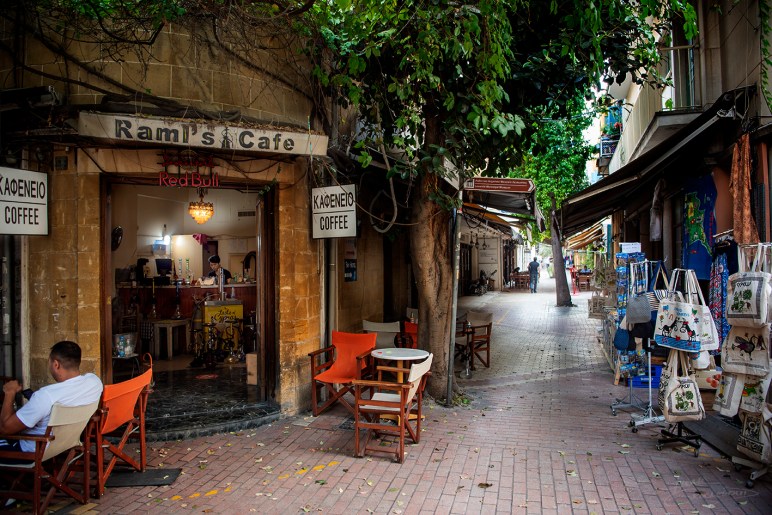
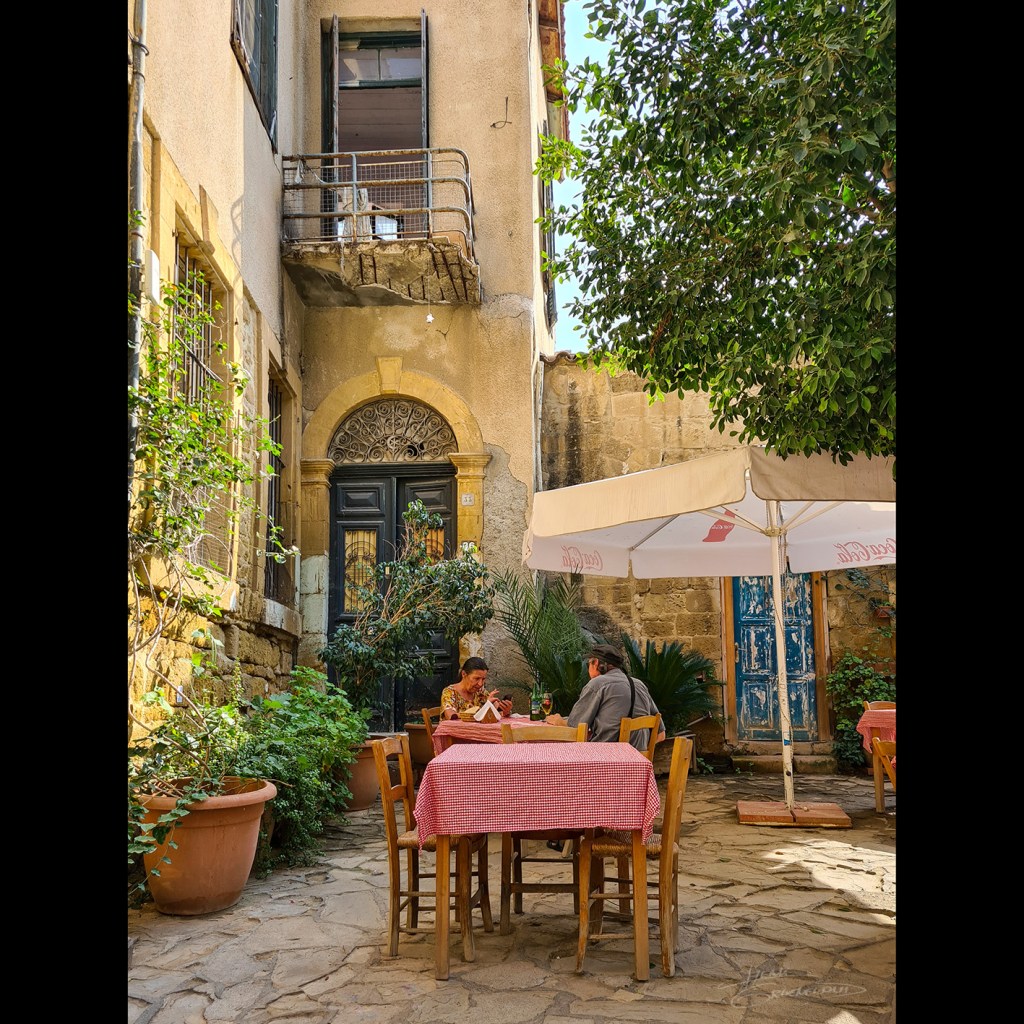
Then again… this Turkish side of Nicosia also has its charms, with summer holiday feelings on beautiful terraces.
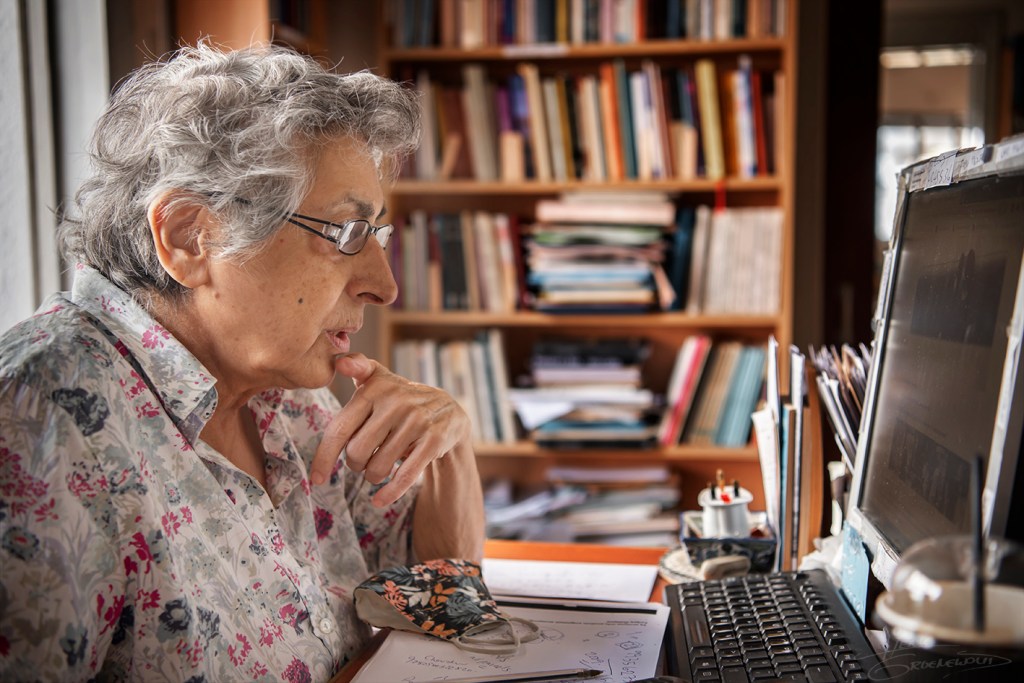
So we went to the Moufflon Bookshop at Pantazis Court in Nicosia to get some local books. Tugged away in an apartment building, rooms filled to the top with books on all imaginable subjects and with the most friendly and helpful bookstore keeper one could imagine. Loved her, and just had to take her picture while working.
Enough Cyprus for now. It’s time for some new adventures.





 De Portrettenmaker