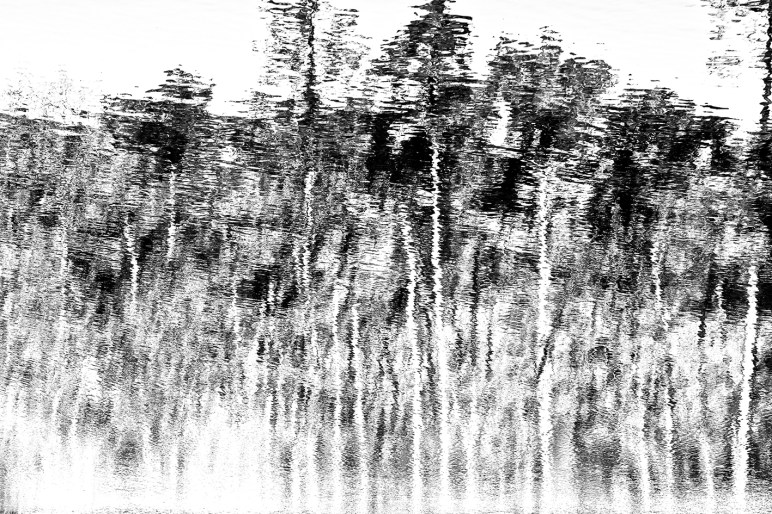
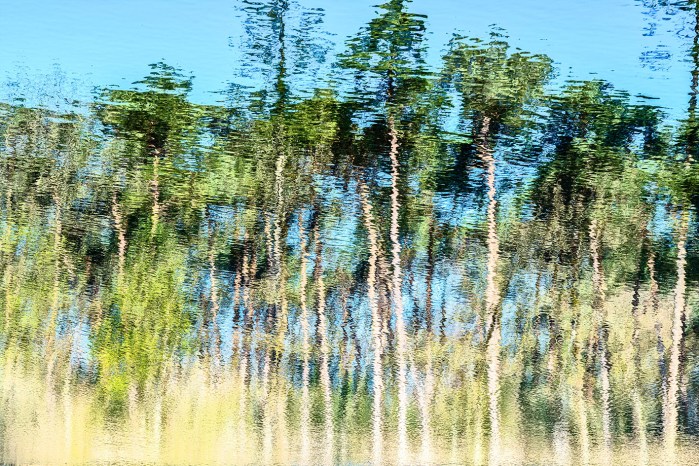
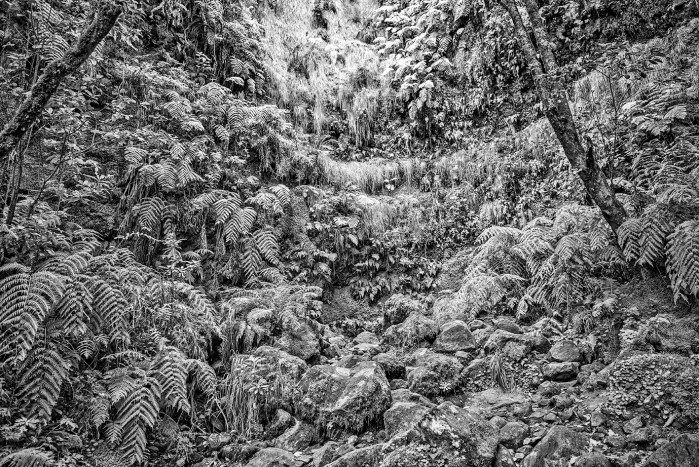
Na de kobaltblauwe oefening van gisteren wierp ik me op een vraag voor mijzelf. Klopt het dat een foto veel kunstzinniger wordt indien hij wordt omgezet in zwartwit? Ofwel: Maakt omzetten naar zwartwit een matige kleurenfoto opeens tot kunst?
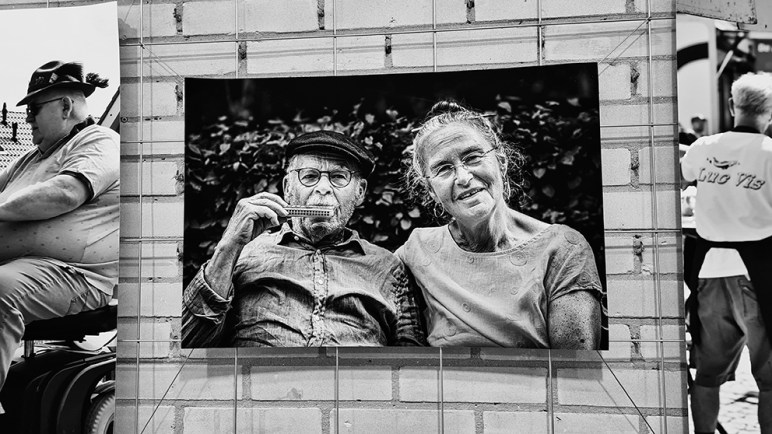
The Rietveldpaviljoen (designed by the famous Dutch architect Gerrit Rietveld) in Amersfoort is a centre to see, celebrate and create art. Next Saturday a new exhibition will be opened on street photography, entitled Paradijsvogels (Birds of paradise). There is an extensive exhibition of the Dutch street photographer Willem Wernsen. Photographers have been invited to celebrate his 70th birthday, and create a personal piece of art inspired by him. For this exhibition I made the photo Wedding day, that I mentioned previously in this blog. I am honoured to have it shown to the public in the Rietveld Paviljoen.
“I’m just browsing through some old stuff,” he said. “Do you see this map? It’s from the airport. I stole it from the Germans.” Not true. It’s a copy of a map made by a modern copyer, probably fifteen or twenty years ago. But who cares? I know that during the war, as a child, he did break into German offices in the village, and that he did steal maps from them. But now, at the age of 96, all these memories are fading into a thick fog. Sometimes elements from different memories come together into a new story that is almost true. Almost. And that’s more than enough now, for him as well as for me.
They were sitting on a bench in my father’s idyllic village. I asked if I could take a picture of them. Of course I first had to explain what my intention was. “In honor of the birthday of a famous Dutch street photographer, we were invited to take a picture in his style as a tribute. So we try to take a picture the way he would take a picture.” “You look like a serious photographer,” She said. “So go ahead. But first you have to take a picture of us with my cell phone.” It was their wedding day; they enjoyed the sun, the beautiful surroundings and especially each other.
Lemurs are prosimians (halfapen) – they belong to the primates with probably the same common ancestors as apes, but as the apes continued to develop larger brains and a flatter snout, the lemurs kept their original character. Lemurs only live in Madagascar and surrounding islands; they are endemic there. There are five families still alive with dozens of species – often seriously endangered, as the total number of lemurs is estimated to have fallen with more than 95% in the last two decades
Rufous mouse lemur (Microcebus rufus)
Petter’s sportive lemur (Lepilemur petteri)
Crossley’s dwarf lemur (Cheirogaleus crossleyi)
Small-toothed sportive lemur (Lepilemur microdon)
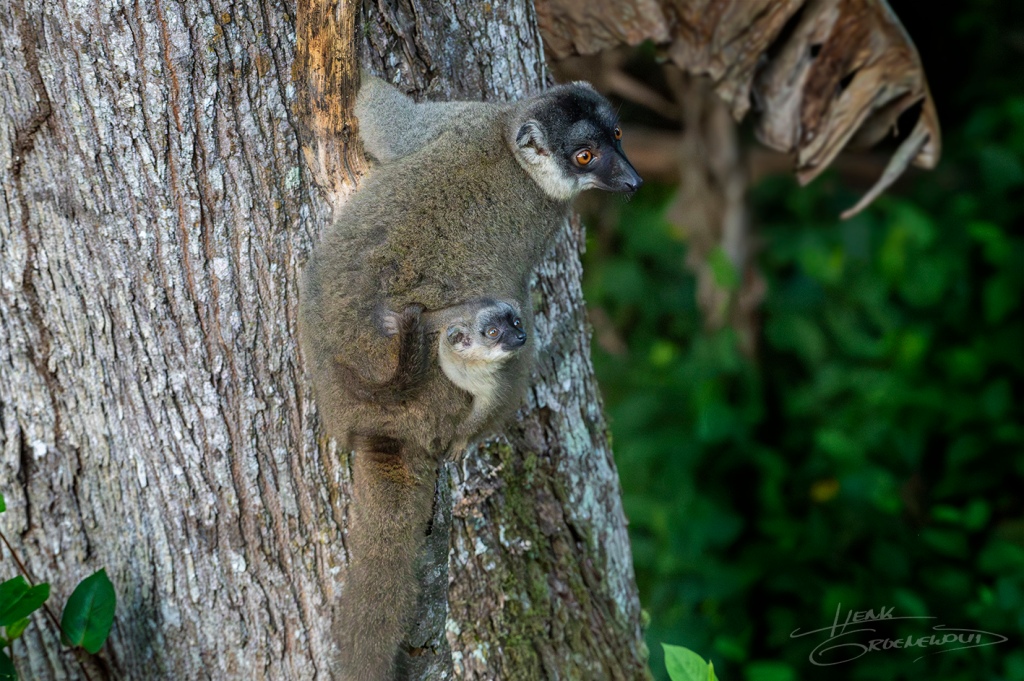
Brown lemur (Eulemur fulvus)
Woolly lemur (Avahi spp.)
Ring tailed lemur (Lemur catta)
Ring tailed lemur (Lemur catta)
Brown lemur (Eulemur fulvus)
Red-bellied lemur (Eulemur rubriventer)
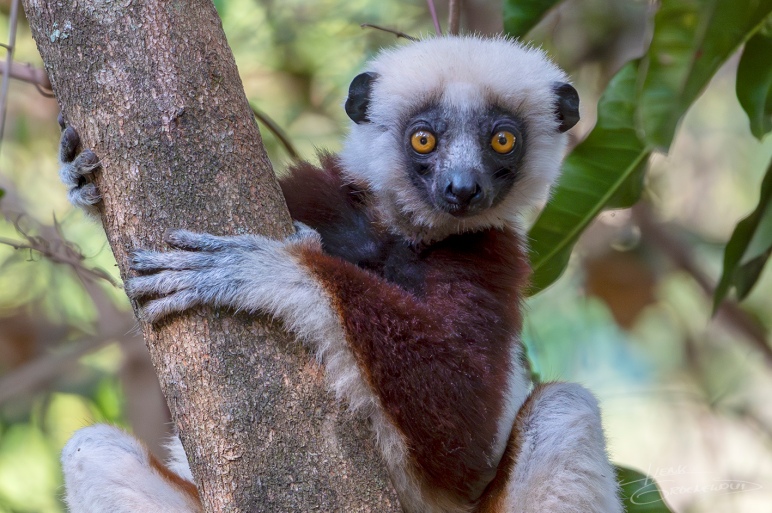
Coquerel’s Sifaka (Propithecus coquereli)
Diademed sifaka (Propithecus diadema)
Black and white ruffed lemur (Varecia variegata)
Grey bamboo lemur (Hapalemur griseus)
Grey bamboo lemur (Hapalemur griseus)
Indri (Indri indri)
Very curious Red-bellied lemurs (Eulemur rubriventer)
Just too cute! One last Coquerel’s sifaka (Propithecus coquereli)






 De Portrettenmaker