Af en toe moet ik even mijn fantasie de vrije loop laten en sprookjes creëren. Nu dus vakantievos nummer 2: Zonsondergang. Welke waardeer je meer: de vorige of deze?
Vakantievos nummer 2: Zonsondergang

Af en toe moet ik even mijn fantasie de vrije loop laten en sprookjes creëren. Nu dus vakantievos nummer 2: Zonsondergang. Welke waardeer je meer: de vorige of deze?
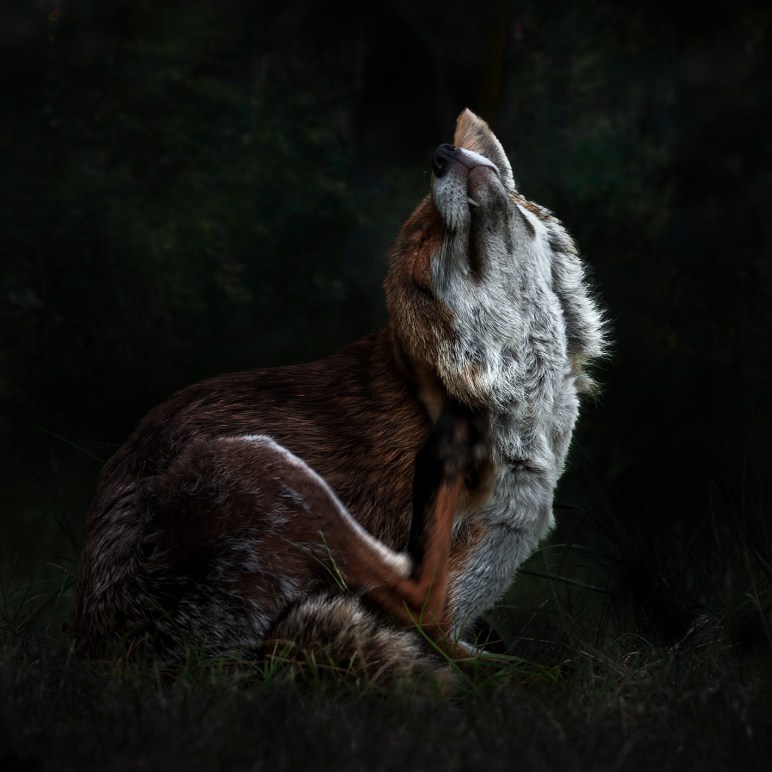
Drie weken geleden was ik even in Londen, op bezoek bij mijn dochter. Londen miegelt van de vossen, wat mij verbaast want nog niet zo lang geleden was de vossenjacht een populair tijdverdrijf. Op sommige plekken ruik je ze in elke straat, en ik heb er wel eens vijf op één dag gezien. Dit weekend bleef de score beperkt tot deze ene… nou vooruit twee dan, maar de tweede telt niet mee, die scharrelde al rond op de vroege heenweg, in een klaverblad langs een Nederlandse snelweg
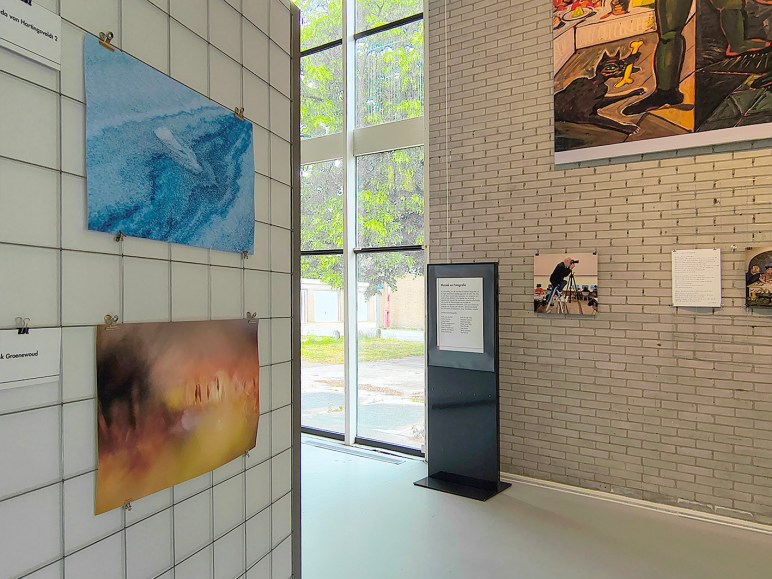
Oh jongens, ik loop hopeloos achter met af mijn fotowerk. De expositie Klankenkoorts in het Rietveld Paviljoen te Amersfoort is alweer afgelopen! Ik doe een beetje te veel dingen tegelijk momenteel, geloof ik. Een van de Sterretjesmos foto’s hing daar, een mooie verbeelding van de Alpensymfonie van Richard Strauss, en dan in het bijzonder het laatste deel van VIII Stille vor den Sturm – Gewitter und Sturm – Abstieg. Ongelooflijk hoe je met muziekinstrumenten de naderende storm kunt verbeelden, de eerste regendruppels die vallen, het onweer dat losbreekt, striemende regenvlagen, de bui die weer wegtrekt en de zon die het landschap weer laat dampen. Precies dat laatste moment, die zon en die wegtrekkende bui, dat is het gevoel dat deze foto én de muziek bij mij oproepen.
Maar helaas, vandaag kon ik de foto ophalen want er is alweer een nieuwe expositie gestart: Schilderen met textiel.
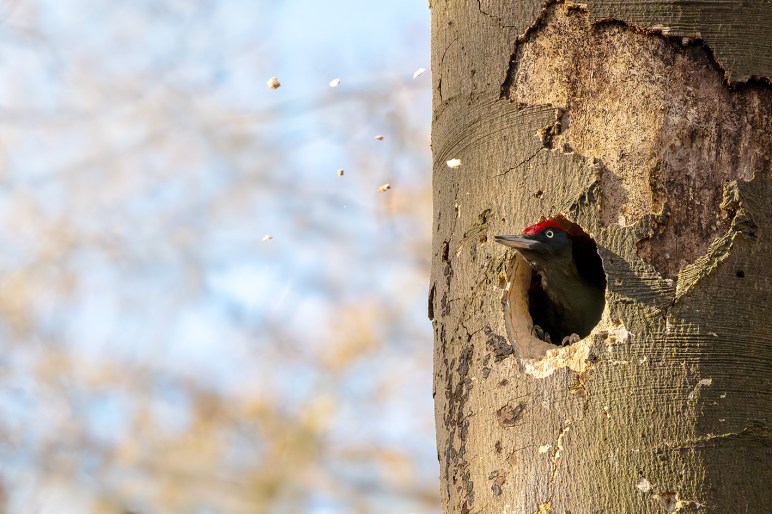
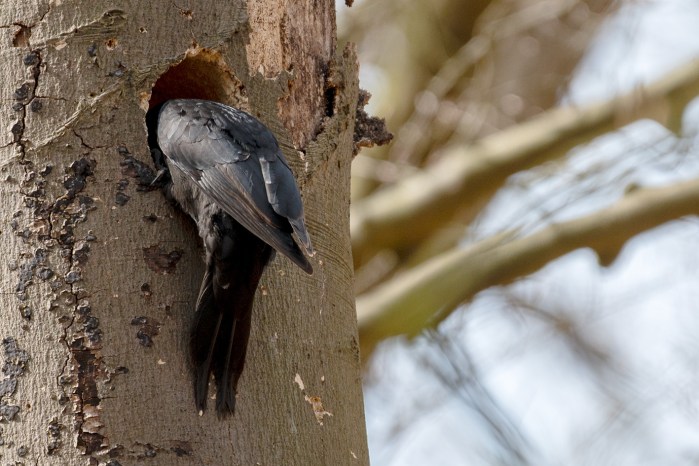
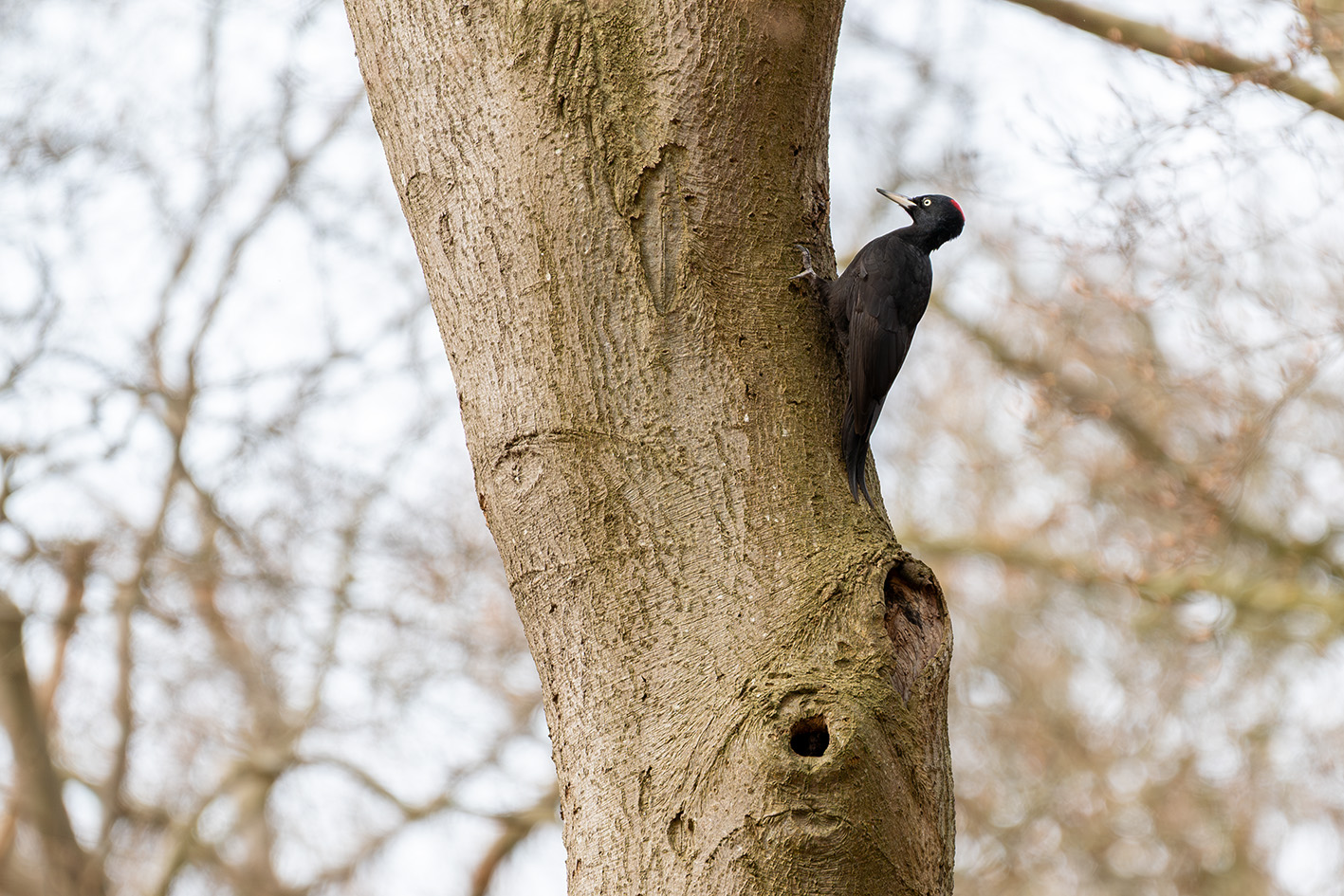
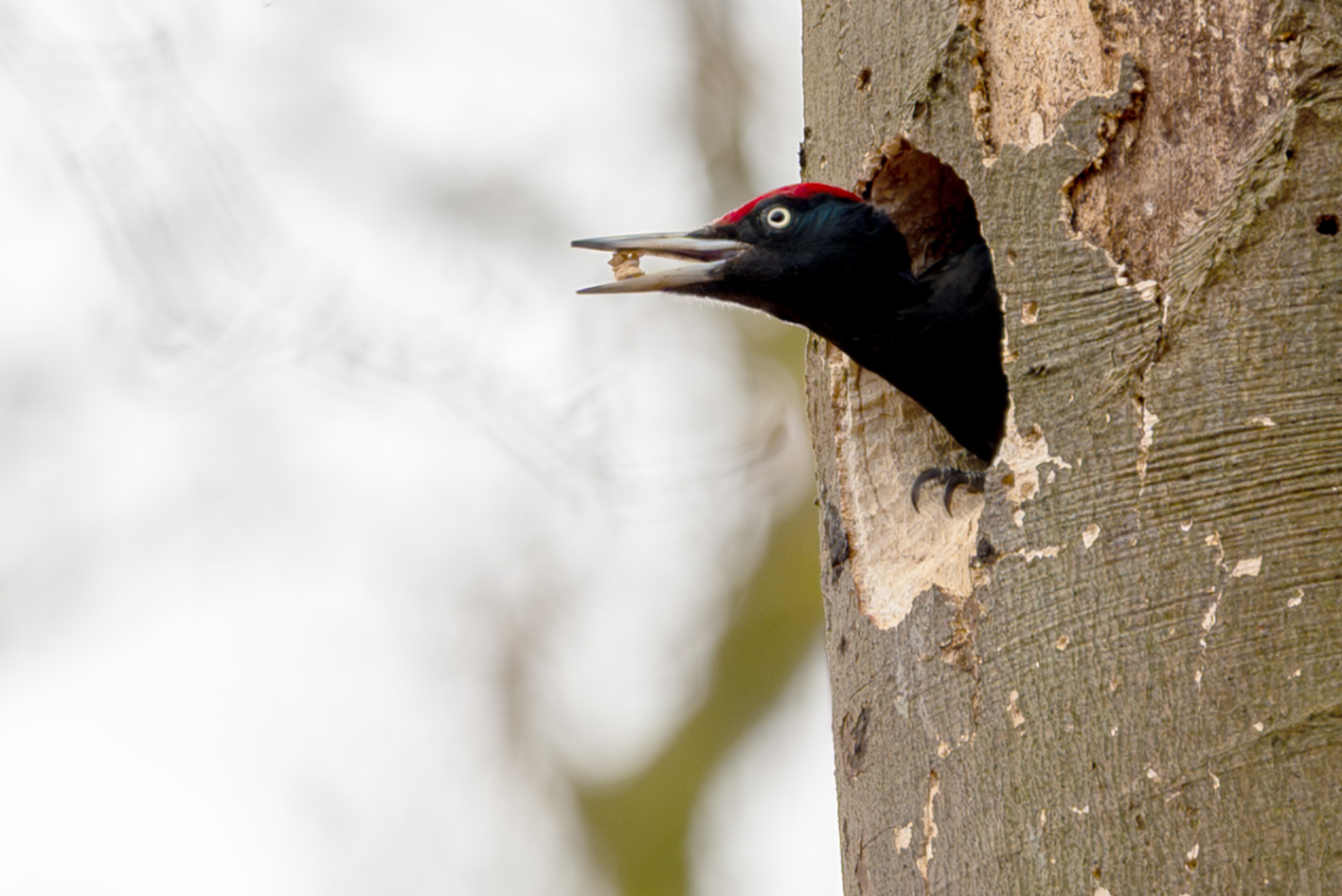
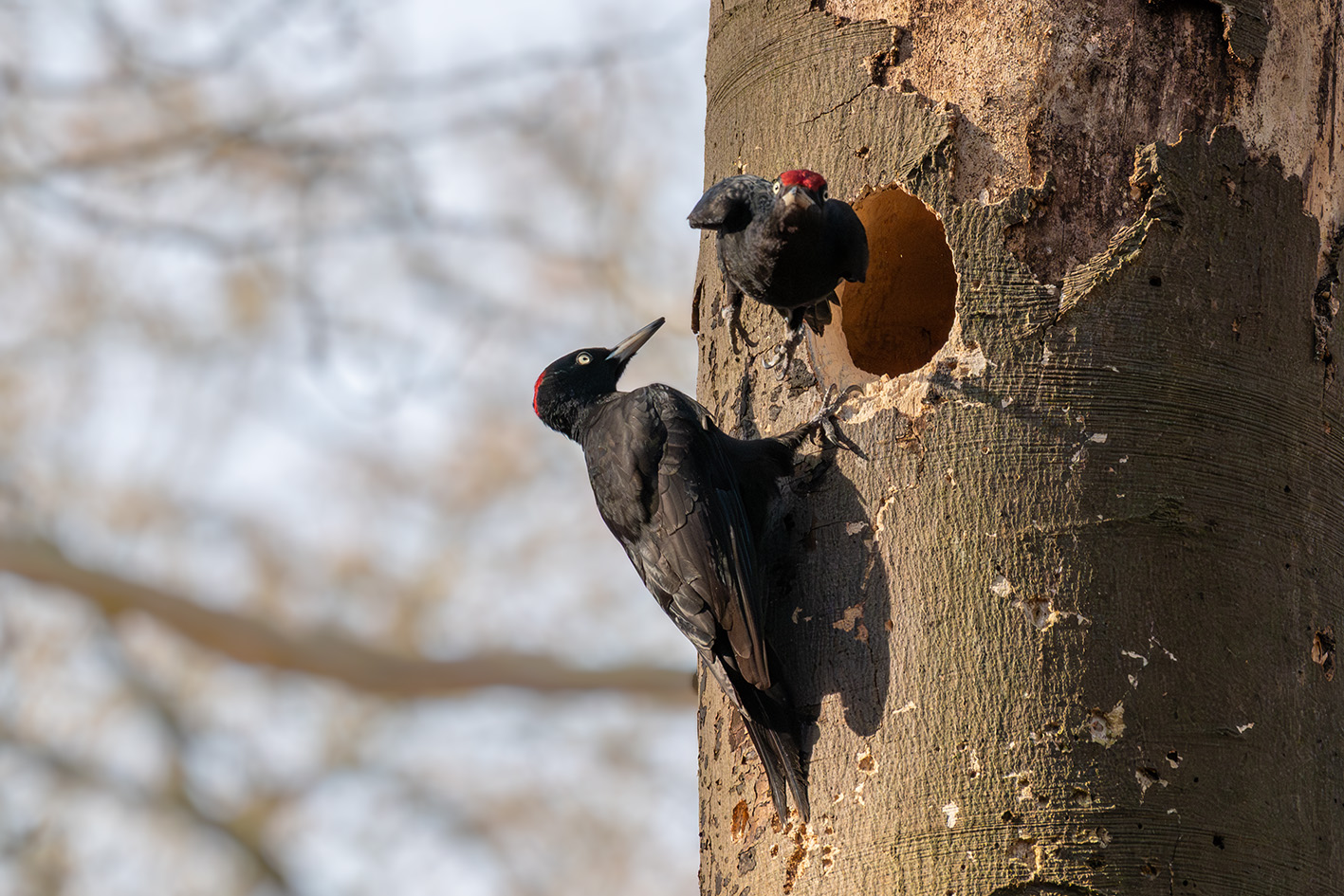
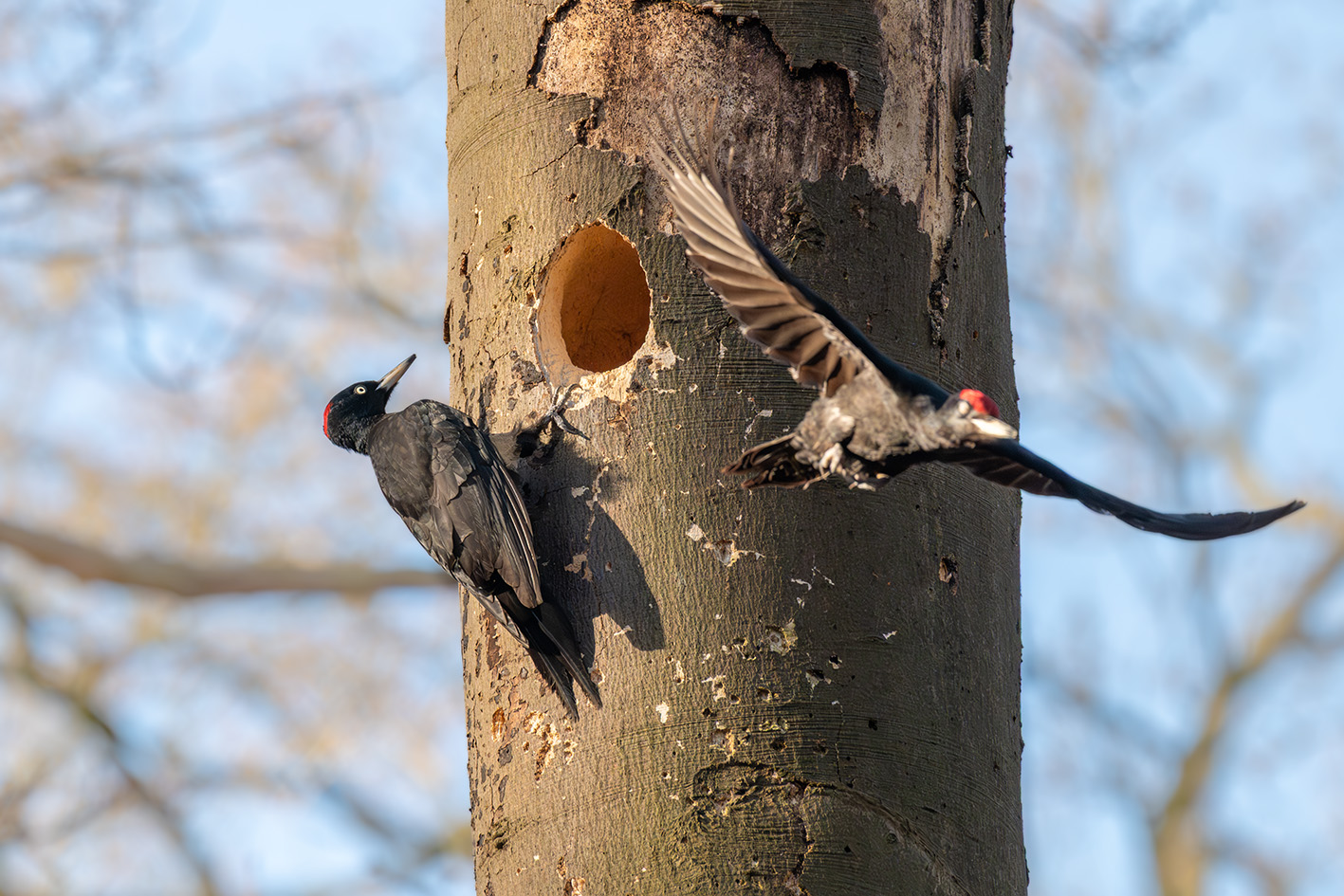
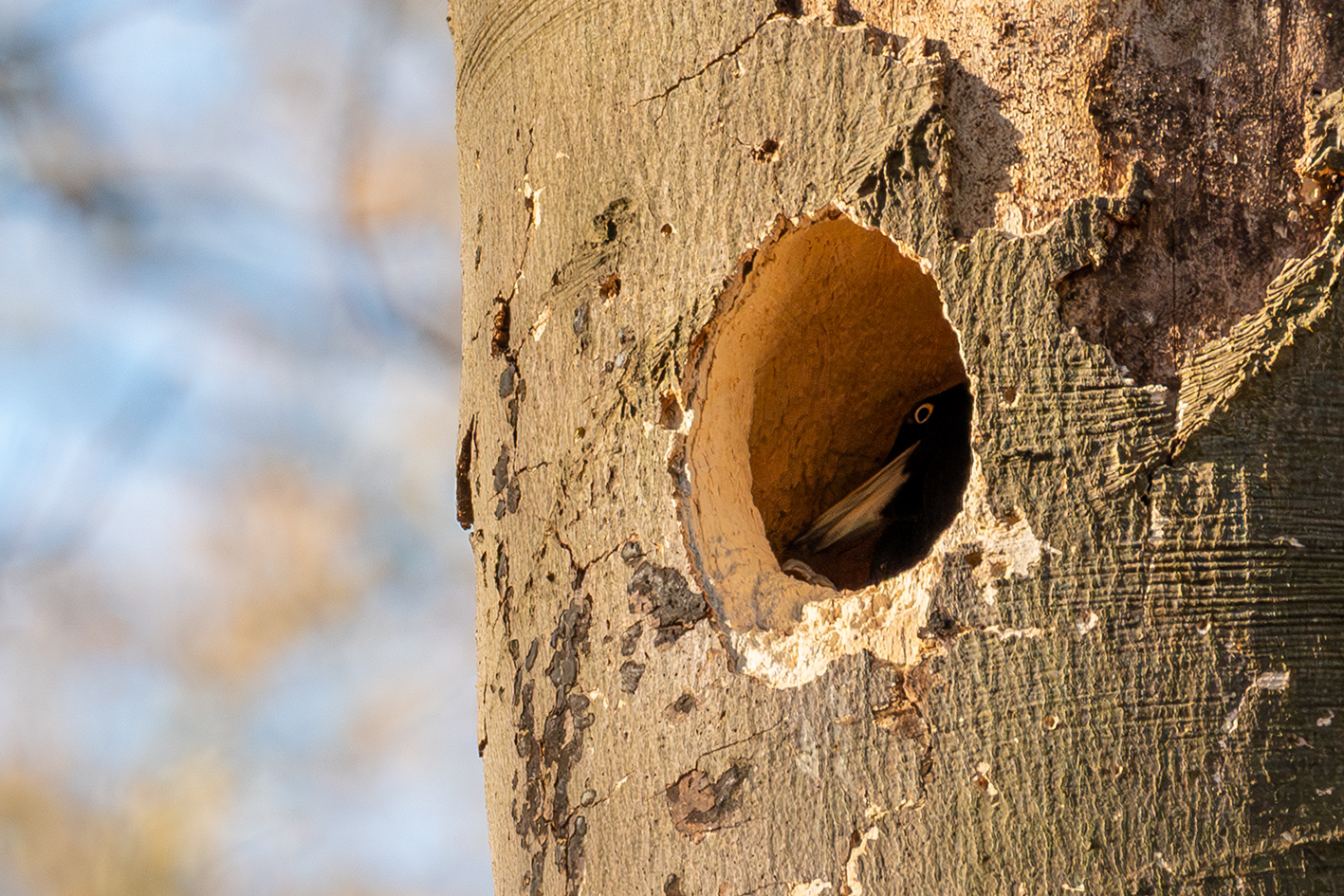
De foto’s zijn alweer van een paar weekjes geleden, toen er nog geen bladeren aan de bomen zaten. Het mannetje zwarte specht was druk bezig met de kinderkamer terwijl het vrouwtje op enige afstand alles in de gaten hield. De eerste dagen werd er nog van buitenaf gehakt, maar al snel was het hol groot genoeg om er helemaal in te kruipen voor de afwerking. Er was enige haast bij, want manlief had de week ervoor een ander nest uitgehakt, een paar bomen verderop, dat kennelijk niet in de smaak was gevallen. Na een paar dagen zat het werk er op, en kon het verblijf na een kleine inspectie in gebruik worden genomen. Inmiddels zit het jonge stel op de eieren, en is alles stil geworden…
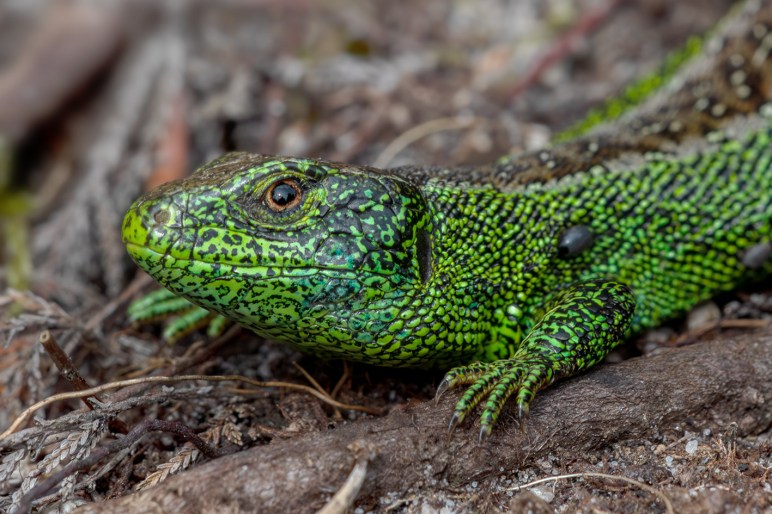
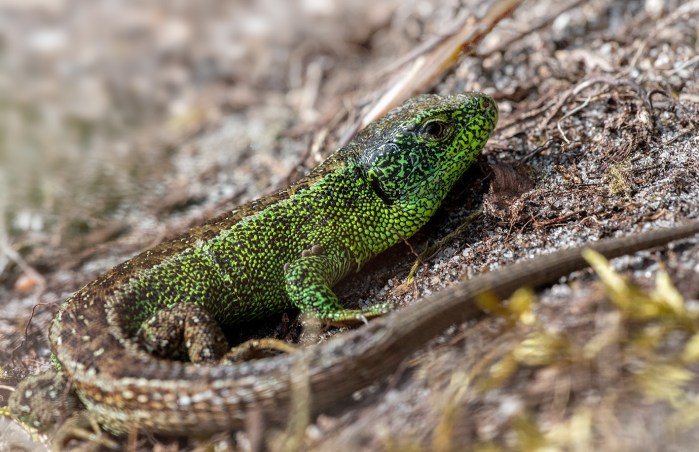
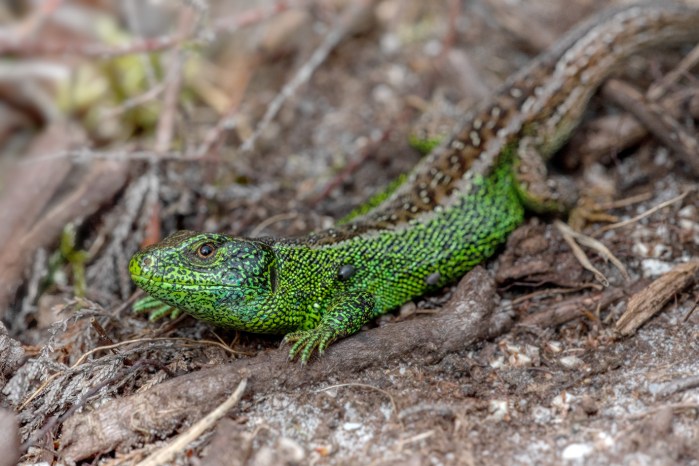
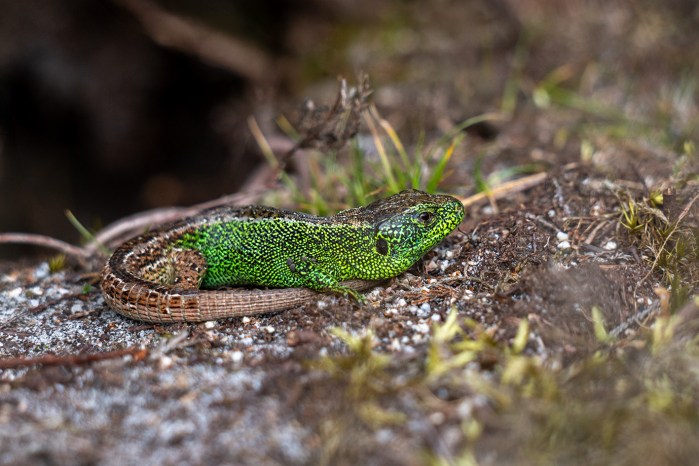
Afgelopen weekend op zoek gegaan naar zandhagedissen. Twee plekken bezocht, en op allebei was het raak! Het kan nog best wel koud zijn, en in de zon strekken de dieren zich zo breed mogelijk uit om maar zo veel mogelijk warmte op te vangen.
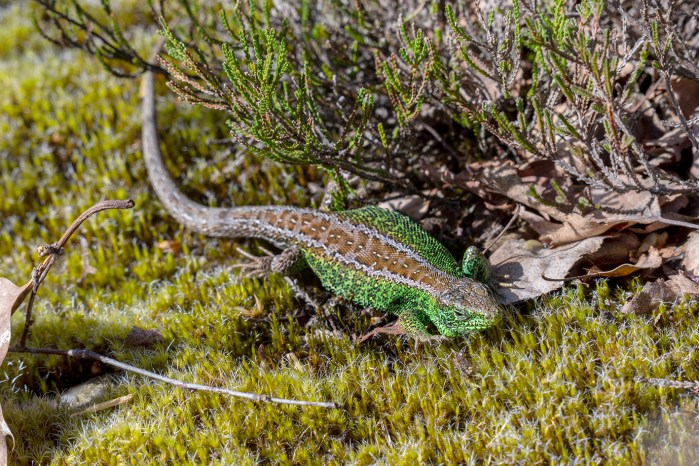
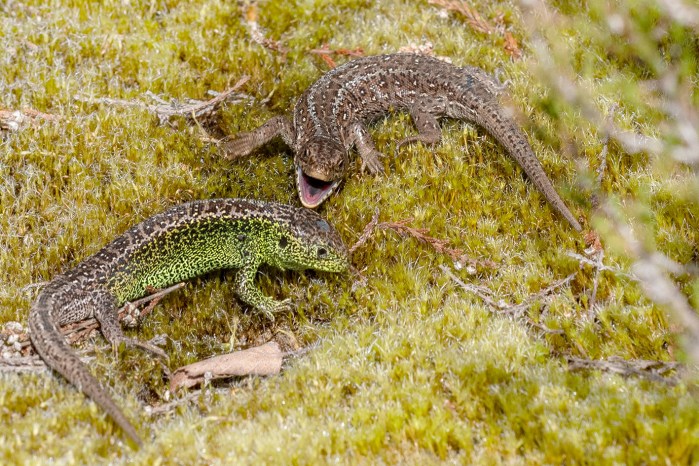
De mannetjes zijn nu op zijn mooist, in hun groene lentekleed. Maar dat maakt dat niet altijd indruk: het vrouwtje hieronder maakte een agressieve beweging, en het mannetje bleef beduusd achter.
Veel hagedissen in dit gebied hebben teken. Dat blijkt vooral de schapenteek te zijn, ixodes ricinus.
Recent onderzoek toont aan dat de hagedissen immuun zijn voor besmetting met de bacterie Borrelia burgdorferi, die de ziekte van Lyme veroorzaakt. In gebieden met veel zandhagedissen komt de bacterie minder voor in de nimfen.
(zie bijvoorbeeld https://ravon.nl/instagram/hoe-de-zandhagedis-zorgt-voor-minder-ziekte-van-lyme)

Venus guided us all the way home after the Vienna trip.
The picture from the plane resembles a bit the picture I took at home a few days ago, with Jupiter and Venus in conjunction.
More blue lately:

Angry ocean

Floating. Mesmerizing

Dusk settles

Tonight, Venus and Jupiter are standing very close together in the sky. That is: they’re standing very, very far apart, but they appear to look close together to us.
In the sunset picture you can see them cosily in the top right corner, in between the greylag geese. Beautiful sunset today.
I also took a few pictures with the standard 500 mm lens, and was very surprised about the details. You actually see the little balls in the sky, and a few moons around Jupiter. Always makes me feel like that little boy, staring into the sky with a small telescope and dreaming of the stars…


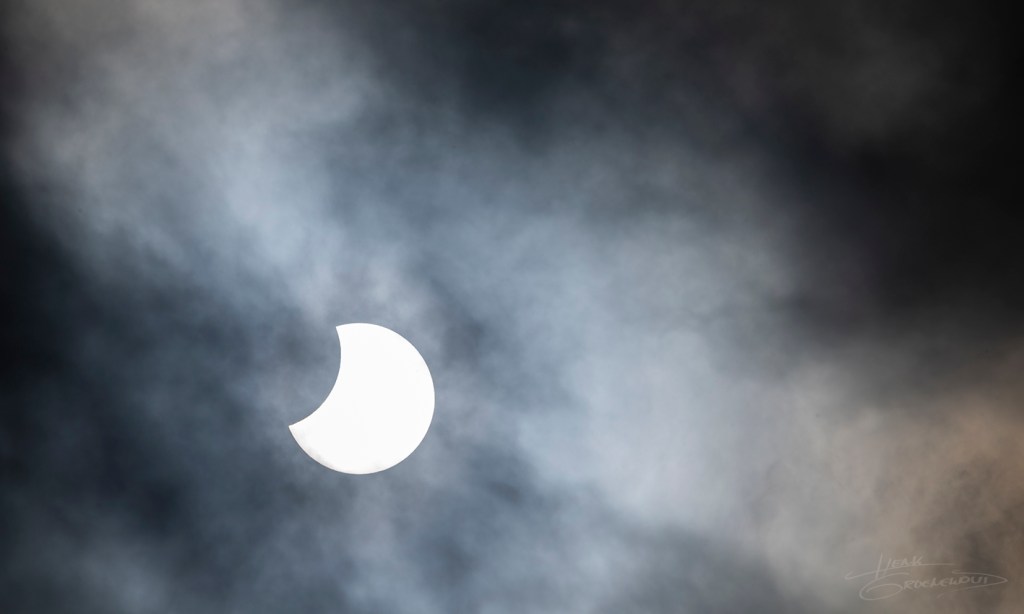
A few days ago I was on the ground with my nose in mushrooms. Today I looked up in the sky. I had completely forgotten about it: the partial eclipse. Fortunately a colleague sent a message: “It’s happening right now!”
I grabbed my camera and ran outside – just in time to see the moon at its maximum cover of one third of the sun.
Same picture twice, just a different crop.
Next show in the Netherlands is predicted in 2025. Already looking forward to it.
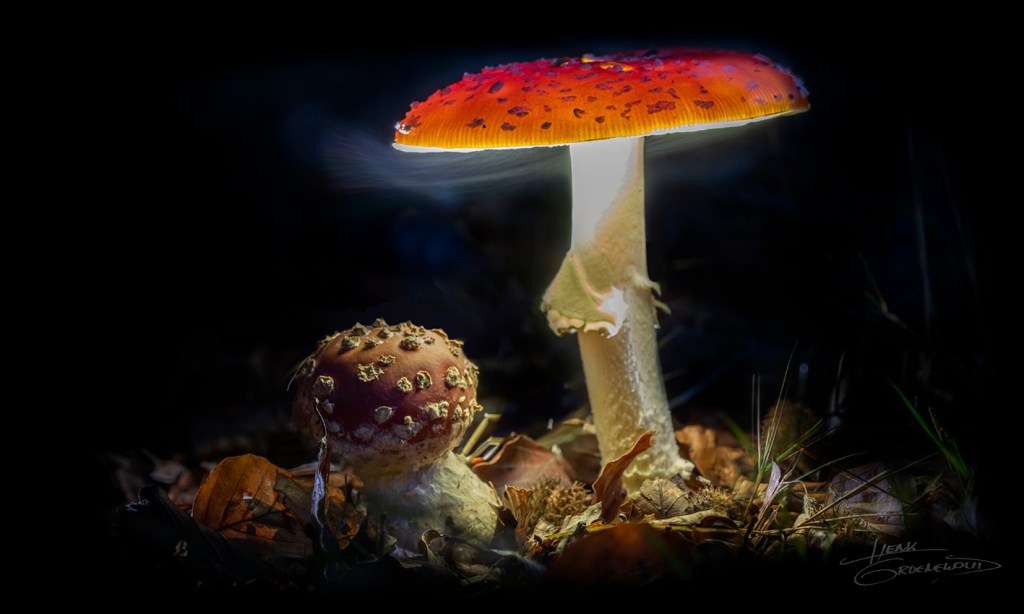
I saw a group of fly agarics, very nice for a beautiful night portrait. But when I arrived at the site in the dark, they had disappeared, broken down. Maybe run over by dogs, maybe taken by passers-by, but gone.
Fortunately the flashlight showed a few nice specimens in a meadow along the path. I knelt in the grass, put the flashlight on the camera bag and started to set up my gear: small tripod under the camera, setting ISO / shutter speed / aperture, focus… and then I heard something buzzing and rustling in front of me.
“Must be a beetle!” I thought hopefully. It sounded like a big one. Also nice for a night photo!
The insect jumped to the light, and tried to sort of crawl into the flashlight.
Not a beetle, but a European hornet. Our largest native wasp, even larger than the so-called terror wasp, the Asian hornet. One of those whoppers that you can hear flying by like a helicopter. Immediately afterwards, a second one landed in the illuminated grass. That one also seemed very interested in the light.
European hornets are quite large in their own right, but I did not know that they grew even three times as large in the dark. And that each hornet split into several individuals during the night. That is to say, these two insects sounded like there were five or ten of them.
The first one became bored with the flashlight, and began to inspect my camera. The second one flew first to the light, then to my camera bag. I wondered how I could lie down and operate my gear without running the risk of accidentally grabbing an insect. And I wondered if these two would be the only ones. A memory came to mind: that time when I accidentally sat on the edge of a lake on top of a wasp’s nest in the ground, and after being stung twice in my leg had to run to avoid worse. And I remembered the articles I’d collected about dogs, hikers, and cyclists accidentally getting too close to a ground nest of European hornets and being attacked by an angry swarm. Then the first hornet decided to inspect me.
I turned off the light and took a little distance. And after a minute or so, when all movement and noise subsided, I carefully walked back to get my stuff and go home. No night photo of the fly agarics today.
I didn’t go back until two days later. And what I hoped for, succeeded this time: catching the spores being spread by the fly agaric. There is a lot of Photoshop in this photo, but the spores are really real! Wonderful to experience the magic of the forest this way.
I learned a few things. The fly agarics are always redder on the other side of the path. European hornets are three times larger at night than during the day, and split into several individuals at night. And for forest photography you sometimes need a little patience

