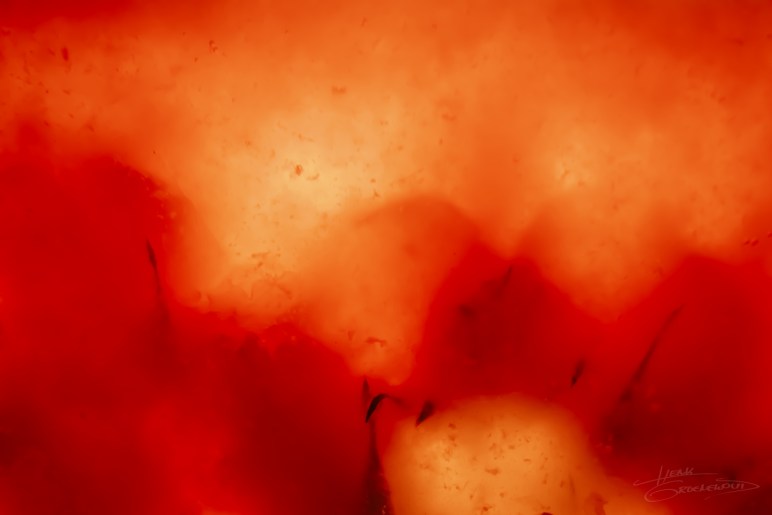
Abstracte fotografie

Abstracte fotografie is een contradictio in terminis. Zodra je iets op de foto vastlegt, dan is de afbeelding onvermijdelijk een representatie van de werkelijkheid. Figuratief dus. En abstracte kunst geeft nou juist per definitie niet de werkelijkheid weer. Vorm en kleur bestaan pro ipsis, op zichzelf en voor zichzelf. Vorm en kleur hebben een intrinsieke waarde, om er maar een handje Latijnse termen tegenaan te gooien. Hoe kan iets de werkelijkheid weergeven (fotografie) en tegelijk niet de werkelijkheid weergeven (abstract)?

Een heerlijke uitdaging en ook verdraaid moeilijk; ik heb flink wat tijd besteed aan het zoeken van een geschikt onderwerp. Zodra je herkent wat op de foto staat, dan is de foto niet meer abstract. Dan is het ‘gewoon’ een bijzondere weergave van de werkelijkheid (“Goh, dat je dat hebt gezien!”). En zodra je allerlei bewerkingen gaat doen in Photoshop, zoals vervormen of vervagen of verkleuren zodat er iets ondefinieerbaars in beeld komt, dan is het misschien wel abstracte kunst, maar geen abstracte fotografie meer (“Goh, wat… apart!”).

Als u herkent wat ik hier heb gefotografeerd, dan mag u het mij stiekem toefluisteren. Maar alsjeblieft niet in het openbaar, want als bekend wordt wat het is, dan mag ik het geen abstracte fotografie meer noemen en moet ik het kopje boven deze blog veranderen.

(Maandfoto naar aanleiding van de lezing van Iris Depassé bij Fotokring Eemland)
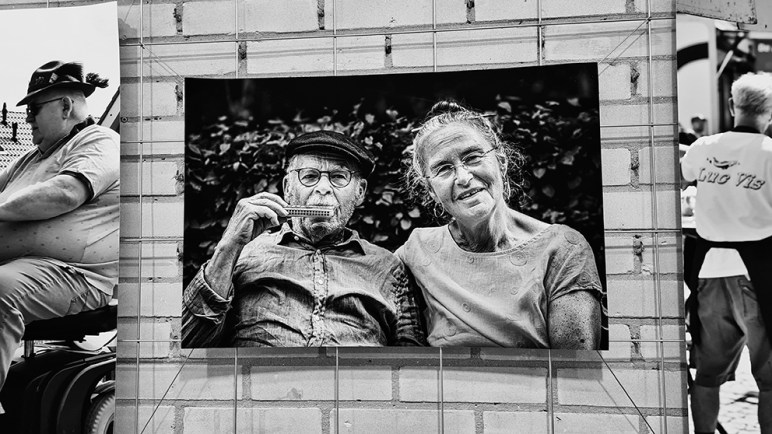
Wedding day in Rietveldpaviljoen

The Rietveldpaviljoen (designed by the famous Dutch architect Gerrit Rietveld) in Amersfoort is a centre to see, celebrate and create art. Next Saturday a new exhibition will be opened on street photography, entitled Paradijsvogels (Birds of paradise). There is an extensive exhibition of the Dutch street photographer Willem Wernsen. Photographers have been invited to celebrate his 70th birthday, and create a personal piece of art inspired by him. For this exhibition I made the photo Wedding day, that I mentioned previously in this blog. I am honoured to have it shown to the public in the Rietveld Paviljoen.

Olive trees in Saint Rémy de Provence


In the continuum of space and history, everything is connected. Musing about a second theme for the Hockney-initiative of our local photography club, I wanted to explore the relationship between David Hockney and Vincent van Gogh. Van Gogh’s art and Hockney’s art have a lot in common. Endless inspiration from nature, the landscape, the use of brilliant colours and the expression of ‘the soul’ of a tree, a road, a hill.

It had to be olive trees. Saint Rémy is the village where Vincent loved the beautiful light. I walked through the countryside where Vincent had walked, saw the landscape he had seen. Not far from the institution where he spent a year after his mental breakdown I found an olive tree orchard. I imagined how Vincent would have seen it, and how David would have filled that view with his colours.

There it was: a symbol of van Gogh’s Provence, with a Hockney filter over it and expressed in my photographic language.

So. What next?