Today I went out for a personal challenge. To find and capture patterns in the world around and make an abstract of it. The beauty of the ordinary.
Found it!
Today I went out for a personal challenge. To find and capture patterns in the world around and make an abstract of it. The beauty of the ordinary.
Found it!

I forgot. Didn’t see it coming…

Water everywhere…
Swim!

Breathe…

Float…

Washed ashore


Bubbles of boiling hot vapour push the surface upward until they break through and Strokkur erupts. In the Netherlands we call these geothermal steam-eruptions ‘geisers’. This generic name is derived from this specific spot: Geysir in Iceland…

Steamy Strokkur. Minus ten degrees Celcius (fourteen Fahrenheit) makes it bloody cold right next to this boiling pond.

Geothermical area around Geysir and Strokkur. Steam everywhere…

Another geothermal area is Krysuvik or Seltun. A small path leads through the hot springs and steamy rivers.

The smell of sulfur is all around.


As a young boy I had a book with stories from all over the world. It had a drawing of a lone fur trapper in the woods, staring at the northern lights sky. I loved that drawing. Such wildness, such loneliness and such beauty! I dreamt of being in the wild myself and seeing the aurora borealis. But I had visited Iceland in summer once, with 5 days of just clouds and rain and wind (We were camping then, my daughter and I, and after 4 days of rain we fled into the first hotel we could find to get dry. Despite the rain and the clouds and the wind it was a great holiday, for even when it rains Iceland is really beautiful).

So I hesitated. What were the chances of going in winter and having both an active aurora and a clear sky? For years I didn’t dare to take the risk and buy a ticket.

Until last November, when I realised that if I didn’t try, I would surely never see it. I bought a ticket and… well, see for yourself.

There’s no need to go to a special dark place to see the aurora. You can see it right from the city. Reykjavic for instance, or more precisely: the bay of Kopavogur.
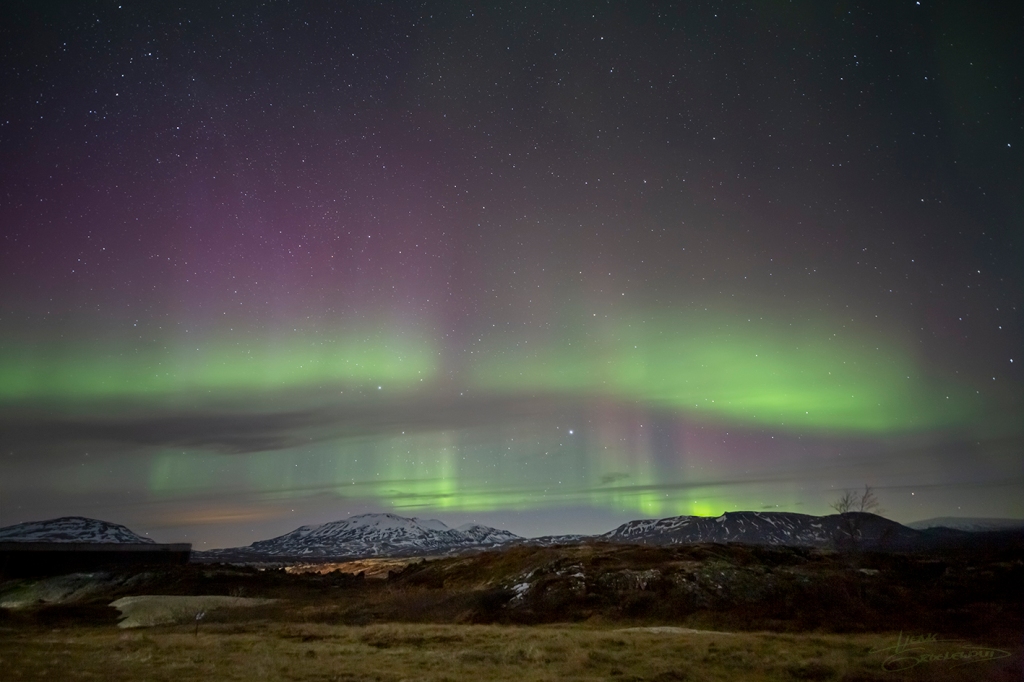

Venus guided us all the way home after the Vienna trip.
The picture from the plane resembles a bit the picture I took at home a few days ago, with Jupiter and Venus in conjunction.
More blue lately:

Angry ocean

Floating. Mesmerizing

Dusk settles

I did it. I created Art with a capital A, and it hung in a museum. A dream come true. In the Belvedere museum in Vienna, Austria, amidst all grand names of art history.
In fact I completed the work Quasimodo of Franz West. “The title of the installation, “Quasimodo” by Franz West, can be translated as ‘the Incomplete’. Consisting of a forged iron hook and a video, this only becomes complete when the hook is hammered into a wall and objects – or in the worst case one’s self – are hung up on it at will, according to the artist…”
So I asked the attendant if I was allowed to hang up something there. He chuckled shyly, not really knowing how to react. “Oh dear… I just started working here. But I guess… if I you read what the artist says, the idea is to do just that…”
I smiled at him “I totally agree. You are so right, and I would really love to do it!”
While the other visitors watched in a bit of a shock, I hung up my camera. Like a statement: Look! I am temporarily pausing my photography as a tribute to the artist and his art. Of course by hanging up the camera I prevented myself from taking professional high quality images. Thereby strengthening the incompleteness, as I was powerless and empty handed as a photographer. I could only take a snapshot with my mobile phone. For me, this snapshot now has become a piece of art in itself, mirroring different layers over the original work.
I call it: Sicut modo. So happy with it!

Art and adoration. I went to Vienna just to see this picture. Recently I visited the Klimt experience at the Fabrique de Lumières in Amsterdam. That raised a few memories: The shop in Amsterdam so many years ago when I was a high school teenager. The cards I found there – all about Jugendstil and fairies and so. And this one that I immediately loved.
So I decided to go and see it. No reproduction can give the feeling of the real thing. I tried to take pictures of the shimmering gold and silver particles, but it’s impossible. You have to see it for yourself. In the Belvedere museum in Vienna.

Art touches one´s sense of beauty. Museums always tickle my creativity and wake up my inner muse. There is so much beauty all around! Just a glimpse out of the window tells me there is a world full of splendor waiting to be transformed into masterpieces. And after leaving the building, I feel enlightened and ready to create the most stunning art myself. View of the Naturhistorisches Museum in Vienna through the blackout screen of the Kunsthistorisches Museum Wien.

View from the Albertina museum in Vienna. Wherever you look, the world will show beauty.

It’s definitely not only the paintings that you should see in the Museum of Art History in Vienna. This is a view of the restaurant…

You just cannot not look up here. Is to too much Baroque here in the lower Belvedere?

All that glitters is… yes, gold!

Cats everywhere in Nicosia. Mainly stray cats. Plenty of bowls with cat food and water in the streets, but the cats know exactly where to find a decent meal.
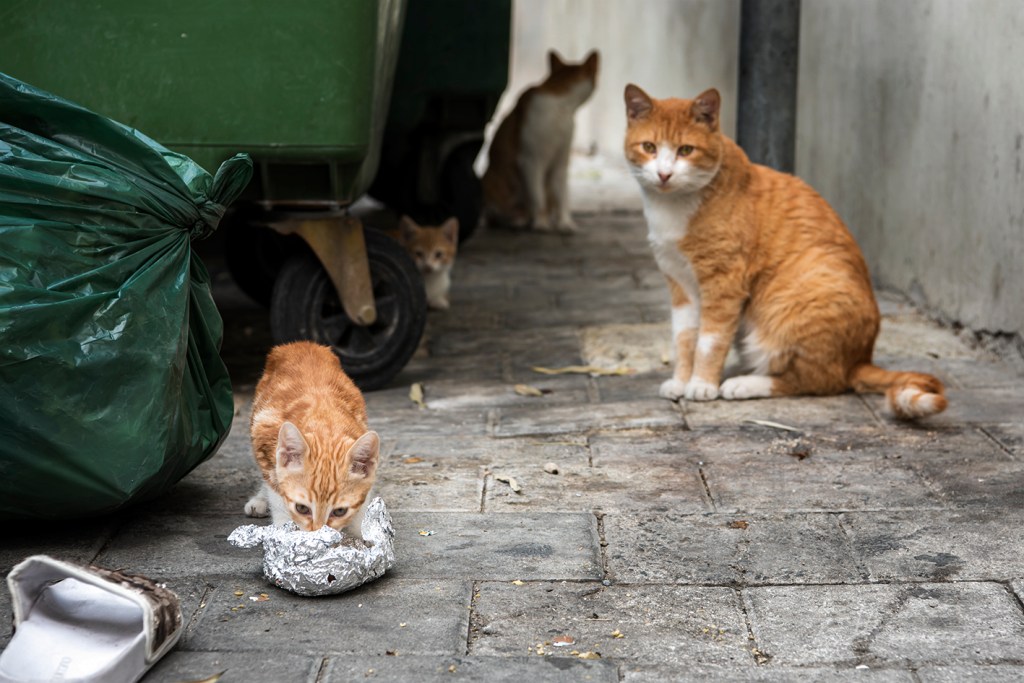
Learning to become streetwise. You have to know the value of waste containers.

Yes, life’s good for cats in Nicosia. No worries. Plenty people to pick up the task of feeding.

At home, cats already have that aristocratic attitude. But here, you truly feel their royal origin.


After the hailstorm Aphrodite showed her kindness. When we drove back along the coast, right at the place where according to the legends she had come ashore so long ago, she surprised us with a stunning sunset. Aphrodite’s rock, near Paphos, is a mythical place. It is said that if you swim around the rock, you will find true love. I’m afraid I only read that the next day…


Was she angry? For three days already we were on the island and still had not visited her temple to pay her tribute. This was after all her island. Kronos, leader of the Titans, had castrated his tyrannical father Uranus and thrown his thingy in the sea. Then the water had started to fizz and out of the foam arose Aphrodite, goddess of love, sexuality, fertility and beauty.

On the way to her sanctuary we stopped at the remnants of the ancient city Koúrion. We barely had time to see it. Dark clouds descended from the Olympus, and a hailstorm came upon us so fiercely that it damaged the front window of our car. With the last hailstones still drumming on the car, we drove directly towards the holy temple of the Aphrodite near Paphos. Immediately her mood improved, for the dark clouds drifted to the sea and soon even the sun showed itself again.

Thousands of years ago this place had attracted people from all over the world: the Mediterranean sea with all its islands and many countries in Europe, the Middle-East and Africa. People attended ceremonies and made offerings. The Roman historian Tacitus described the altar and a sacred stone: “Blood may not be shed upon the altar, but offering is made only with prayers and pure fire. The altar is never wet by any rain, although it is in the open air. The representation of the goddess is not in human form, but it is a circular mass that is broader at the base and rises like a turning-post to a small circumference at the top. The reason for this is obscure.”
This was the very stone.

Aphrodite was also depicted in her human form. For the goddess of love and fertility and sexuality, an offer could be to sacrifice the own body as in ancient times, making love was seen as a sacred act.

This idea has roots that go back more than 7.000 years ago, to the Sumerian cult of Inanna. In Cyprus the first settlements dated from 3.300 year before Christ. In that time the Phoenician goddess of Astarte was worshipped, also a goddess of sexuality, fertility and war. In the Greek period, Astarte became Aphrodite, and the city of Paphos was known throughout the world for it’s parties, wine and prostitutes. The stone at this sanctuary never became Venus, as the Roman Emperor Theodosius I outlawed all pagan religions in the year 391 and the sanctuary of Aphrodite fell into ruins.


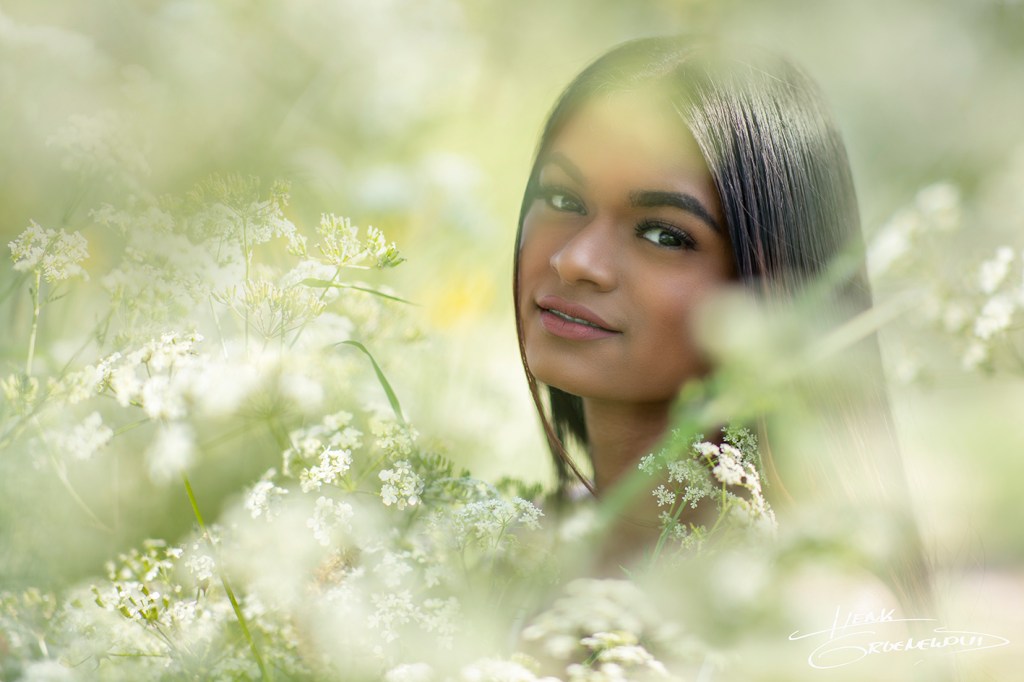
 De Portrettenmaker