Eerder schreef ik over de fotobewerkingen geïnspireerd door Hockney. Dat was hier en hier en hier en hier. Een initiatief van Rob Renshoff van Fotokring Eemland om een tentoonstelling te realiseren – en het is hem gelukt!
Curator Mariska Doesburg heeft inmiddels 25 foto’s geselecteerd die samen een mooie eenheid vormen en die in de komende weken te zien zullen zijn in het Rietveld Paviljoen in Amersfoort (Zonnehof 8, 3811 ND). Met daartussen ook één van bovengenoemde foto’s.
Officiële opening is op 14 oktober 15:00 uur. Kan ik zelf helaas niet bij zijn, maar ik kom zo snel mogelijk
Our local photo club has a project: To create a piece of art photography inspired by David Hockney. I love these kinds of challenges, and dove into the Hockney universe. In turn, Hockney was inspired by Vincent van Gogh, so I dove into that universe as well and looked at it through the eyes of Hockney.
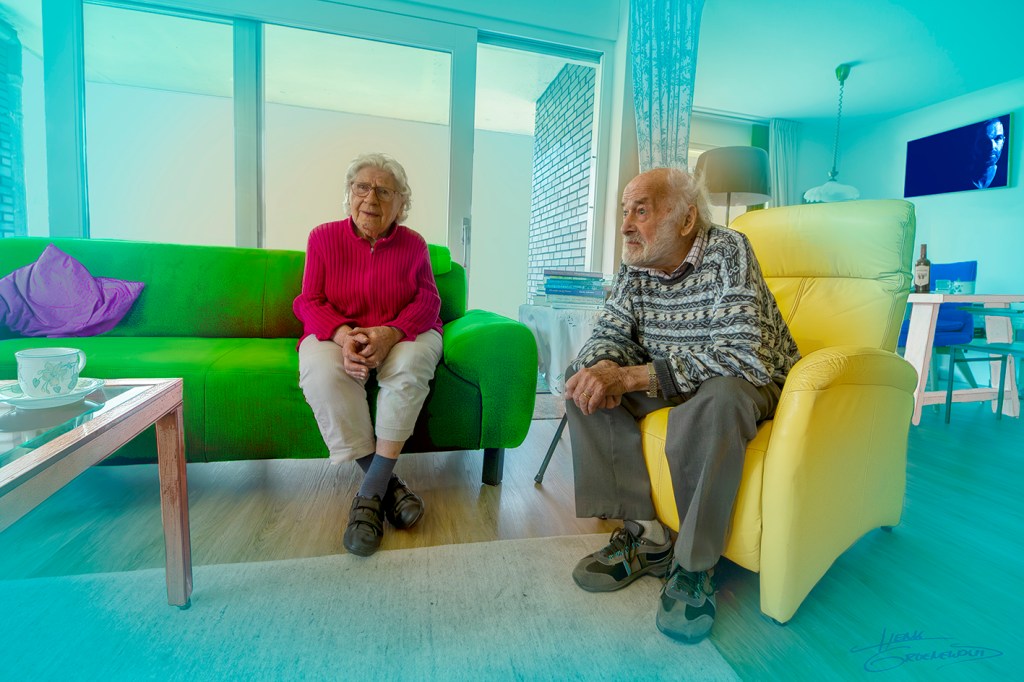
First piece is inspired by the double (or actually triple) portraits ‘My parents and myself’ and ‘My parents.’ I decided to look for the fragile state of existence of my father, age 95, and his sweetheart, age 93, and the relationship between the three of us in their shrinking and simplifying, schematizing world. Alzheimer has got a firm grip on him; yet the beautiful bright colours make life look wonderful
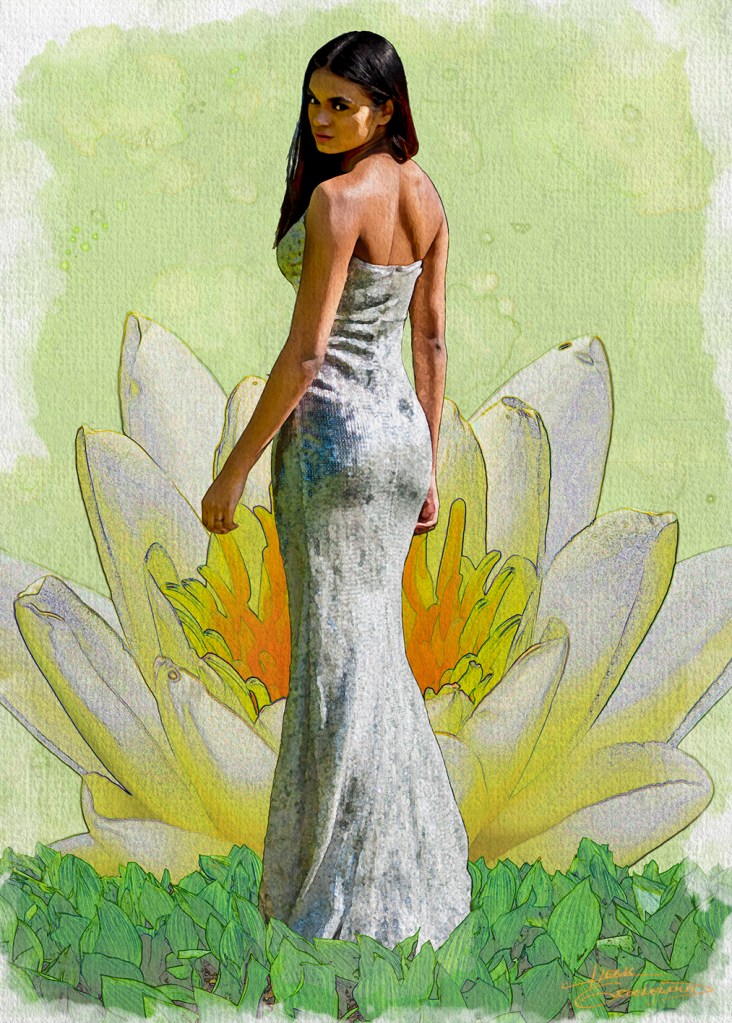
Floating away into the wonderful world of Jugenstil and Art deco. That is another way to go back in time. I love this period of more than a century ago, when books were written with words that had a life of their own and paintings offered a dreamy world where miracles were just about to happen. This portrait was taken almost two years ago, and needed the time to grow into this aquarel style
A few weeks ago a fellow photographer from Amersfoort gave a presentation on Saul Leiter. Famous New York fashion photographer. Besides his professional work he did a lot of street photography. Educated in the arts and painting, he was looking for a dialogue between colour and remarkable compositions. People are always present in his work, even if it is just a hand or a foot. At first glance, many pictures seem failed, for the main subjects are often only partly visible or blurred. Then it starts to dawn on you. His aim is not to get a nice picture of a person, or a perfect eye-pleasing frame. His aim is to create space, tension, contrast of light and a clash of colours.
So on a rainy night I went out to the city closest to Hollandsche Rading, Utrecht, to try and look with different eyes. Not his eyes of course, for his life was completely different from mine. But my eyes, trying to look as a child to lights, colours and people. The result is a kind of impressionist winter series.
There it was: the red umbrella, so often present in Leiter´s New York pictures.
So I went on this journey of discoveries. Into the unknown. Looking for flatworms…
You might think that in the Netherlands we know all about nature, and have discovered everything there is to be discovered. At least that was my assumption. But a few years ago two scientist went out to look for flatworms. Especially for the New Zealand flatworm (Arthurdendyus triangulatus – Nieuw Zeelandse landplatworm) that was put on the European Union list of invasive alien species in 2019 as it is a predator of earthworms – the worms that we need to create fertile soils. Those of you who read The Hitchhikers’ guide to the Galaxy will recognise it’s scientific name 😊. Anyhow, apparently these creatures are so unattractive, that no one ever bothered to look at them or report any findings. There are bird groups, insect huggers and botanical twitchers, but there is not one single flatworm – society.
Fortunately, they didn´t encounter any New Zealand flatworms. But just few visits to zoos, greenhouses, botanical gardens and city backyards resulted in a handful of new species, never before recorded in the Netherlands. If you want the full background, look here.
Nobody cares for flatworms. And I can’t blame anyone. They look like their relatives, the leeches. And I really, really dislike leeches.
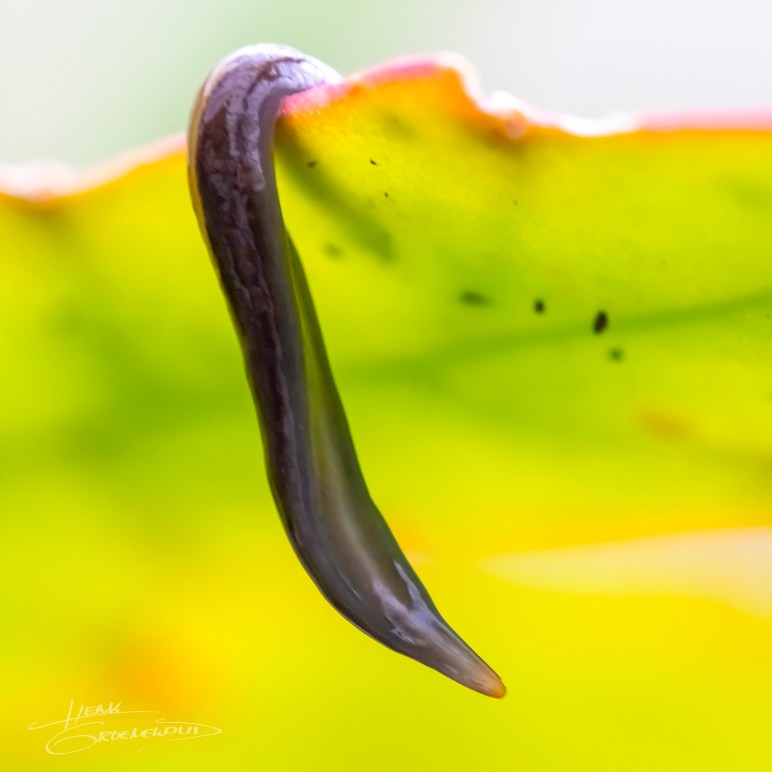
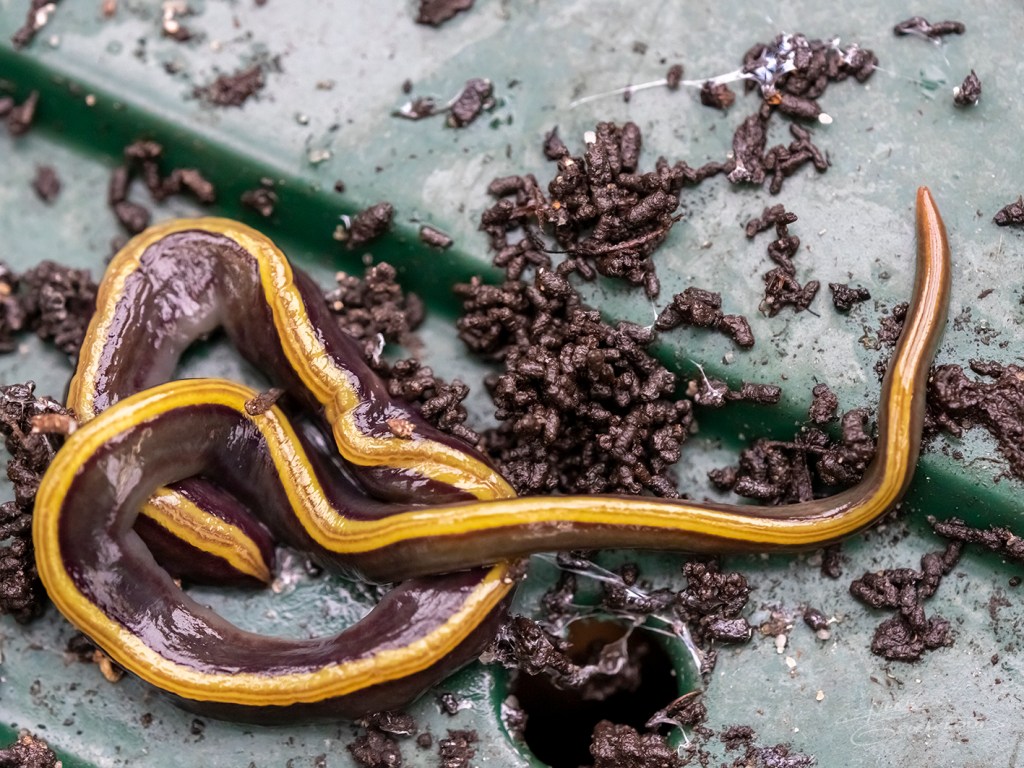
This weekend we did a search party in a butterfly garden. Turning pots and bricks to see what lives beneath. Perfect conditions for flatworms: humid, warm, organic material and lots of tiny creatures crawling in and on the soil. I was very proud to find two individuals of the yellow-striped terrestrial planarian (Caenoplana bicolor or Caenoplana variegata – Grote Australische geelstreep). As the name indicates, it is alien to Europe (look here). Alien, but no threat to biodiversity so not classified as ‘invasive’.
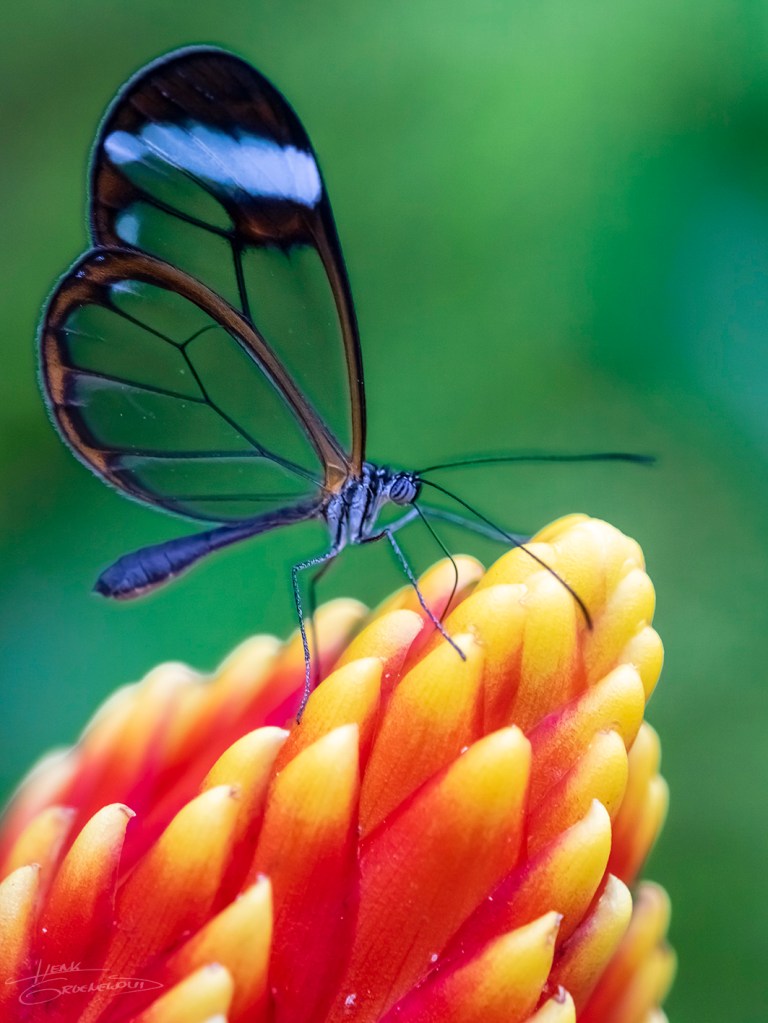
To ease your mind and make you sleep well, I’ll end this story with one of the butterflies of the garden. Sheer beauty.
It´s not what you see. It never is. It´s what you think you see.
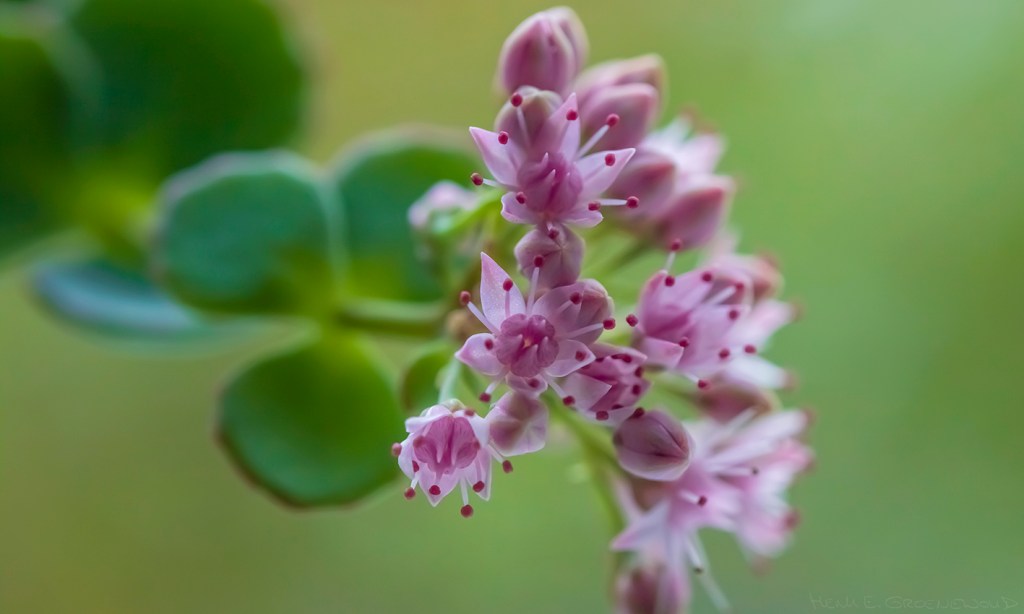
This is an ugly little plant. You might think it is nice, with delicate flowers, but that is because I´m a great photographer (– cough! –). It has been in our family for sixty years. It is tiny, with small leaves and even smaller flowers, and after flowering it shrivels, dies and disappears again.
And then after a short while, it comes back alive. As long as I can remember it has been in our house. My father made a little note that lies besides it: “No one ever said:‘What a nice little plant!’ We don’t think much of it either.”
But it’s not about what we see with our eyes. It’s what we see with our minds. It is a sole survivor of the flowers arrangements of my parent’s wedding. If I look at it, I see my parents wedding pictures. Amsterdam, black and white, sunny day and everyone radiating from happiness! A strong little fellow. It survived my mother, and it will probably survive my father as well. Who knows, it might even survive me…
I secretly took a cutting of it, and grew it at home. It needs little care, just a little light and a little water – not too much! It keeps on growing, flowering, dying and rising up again. Look really, really close, and see how beautiful these tiny flowers are!
Panta rhei. All is change. Somehow these words echoed around this week. Talking with a friend about the future of nature. Taking with elderly about getting old and seeing all that once was so familiar crumbling down. We tend to focus on what we lose during these changes, things we want to keep forever. But there is no forever.
At the age of seventeen, my friends and I went traveling by train for a month through Europe, all the way to Greece. So many precious memories! I still have a few pictures of us sleeping on the beach under the stars.
Last week we went out again, camping for the weekend at the island of Schiermonnikoog. Unfortunately on the way there we got into the worst traffic jam ever, due to a what can be described as no less than a small disaster in the regional power grid. Four hours delay – we missed our boat and we also missed the last boat of that night.
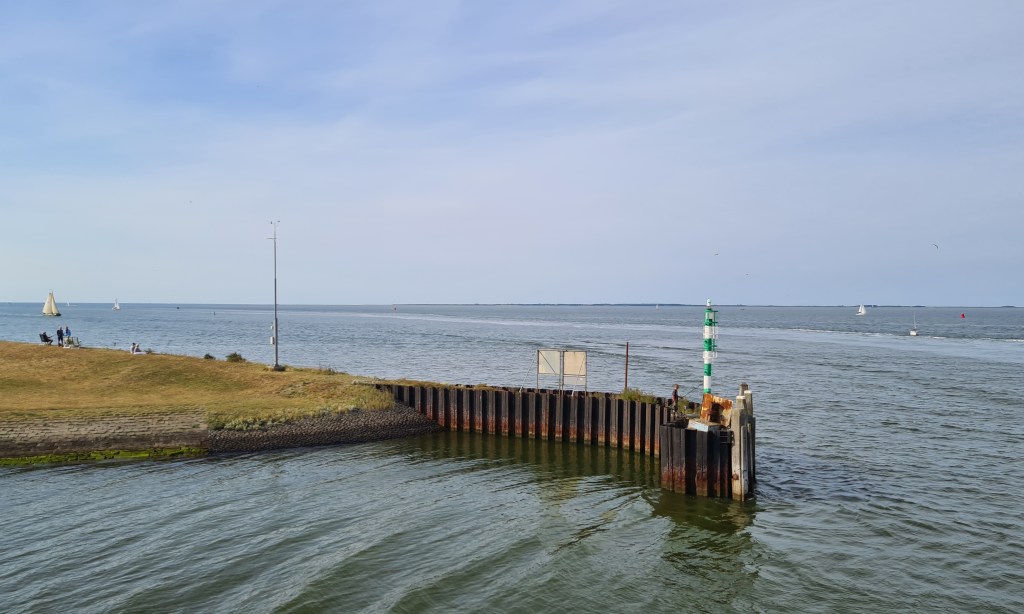
Great camping just under the green / white pole– a bit rocky though
No problem. Once again, we unrolled our sleeping bags (this time on the edge of a jetty) and slept under the stars.
The next day we took the first boat and laid down on the beach like forty-two years ago, under a clear blue sky. I felt 17 again – although swimming was a bit colder here.
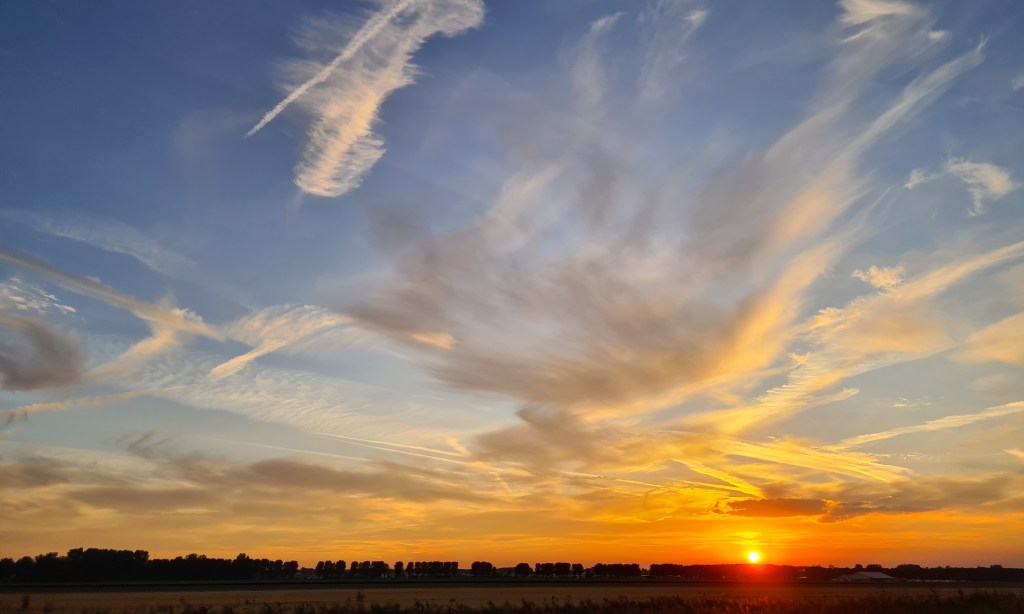
The winds of change are blowing fiercely. Always. It might hurt sometimes, but there is and always will be beauty in the world. Like that stunning sunset that concluded our wonderful weekend. No Photoshop, no filters, no tricks. Just taken with the phone from the backseat of the car.







 De Portrettenmaker