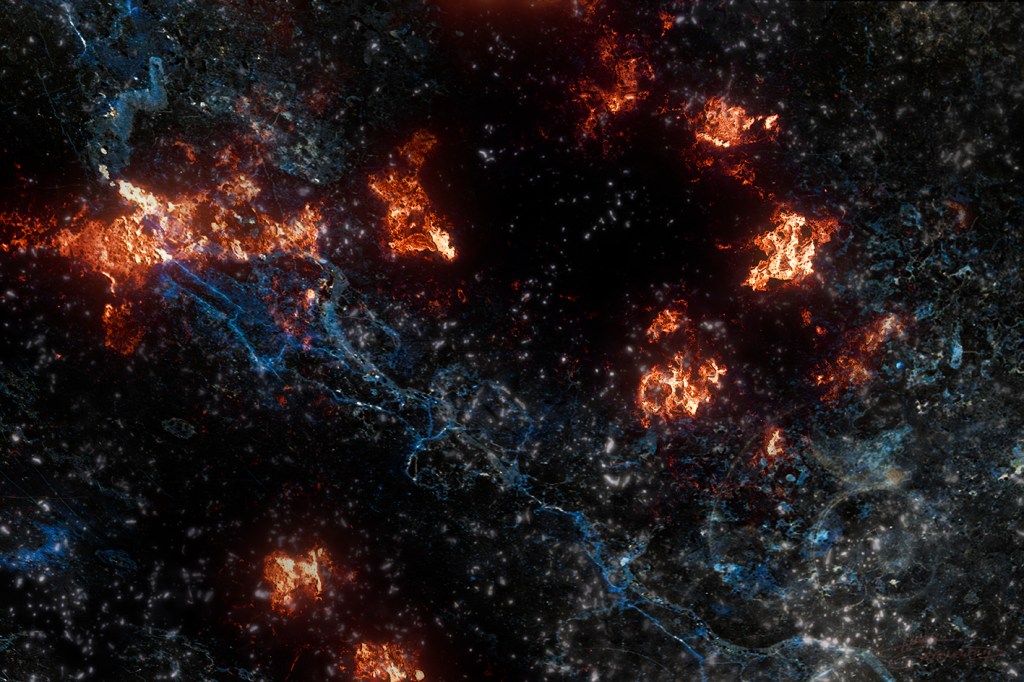
Today I went out for a personal challenge. To find and capture patterns in the world around and make an abstract of it. The beauty of the ordinary.
Found it!
Today I went out for a personal challenge. To find and capture patterns in the world around and make an abstract of it. The beauty of the ordinary.
Found it!

Eerder schreef ik over de fotobewerkingen geïnspireerd door Hockney. Dat was hier en hier en hier en hier. Een initiatief van Rob Renshoff van Fotokring Eemland om een tentoonstelling te realiseren – en het is hem gelukt!
Curator Mariska Doesburg heeft inmiddels 25 foto’s geselecteerd die samen een mooie eenheid vormen en die in de komende weken te zien zullen zijn in het Rietveld Paviljoen in Amersfoort (Zonnehof 8, 3811 ND). Met daartussen ook één van bovengenoemde foto’s.
Officiële opening is op 14 oktober 15:00 uur. Kan ik zelf helaas niet bij zijn, maar ik kom zo snel mogelijk
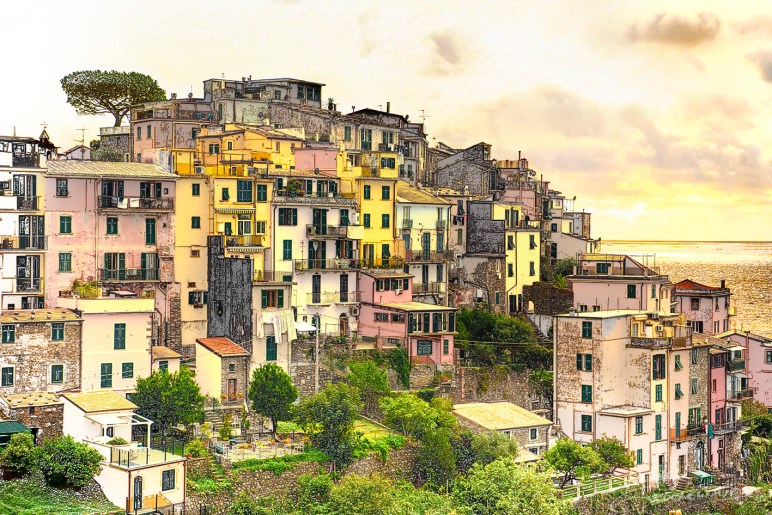
Allright. Back on track again. Corniglia, Cinque Terre, Italy
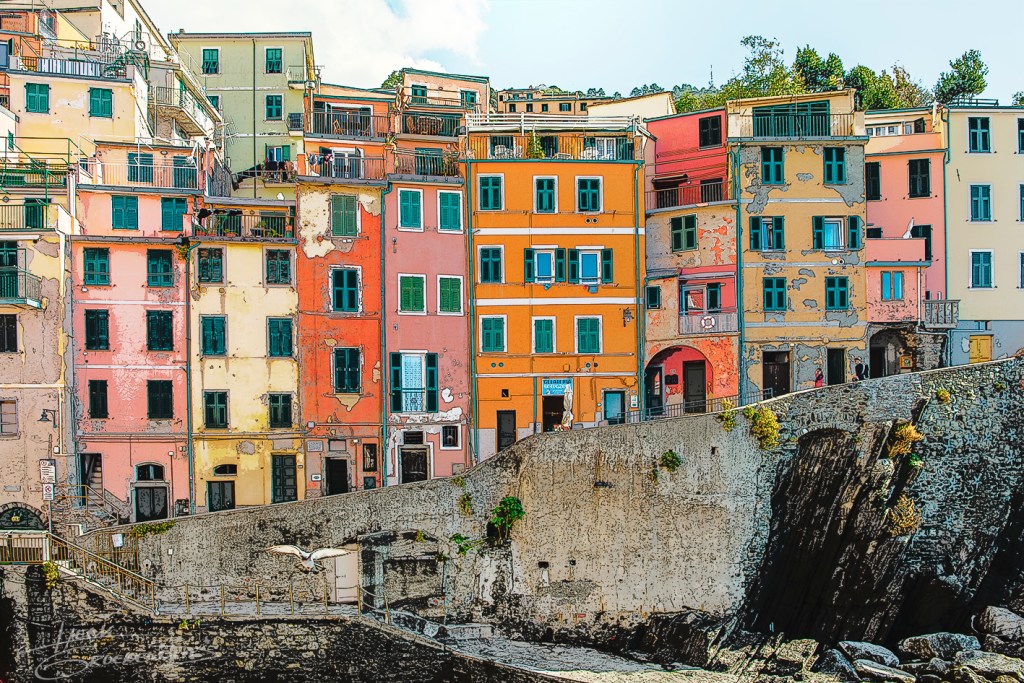
You cannot not become a romantic artist in Cinque Terre. It´s inevitable

Now I understand why all those painters came here, to Cinque Terre

Waves crash on the rocks at Lovers´ lane, Riomaggiore


Heb je Hockney’s landschappen van Yorkshire wel eens gezien? Kleurige velden en wegen lijken om elkaar te dansen en spelenderwijs om aandacht te vragen.

Afgelopen maand ben ik weer naar Frankrijk gegaan, fietsend over steile hellingen en zoekend naar dergelijke patronen in het landschap: boerderijen, houtwallen, percelen als een mozaïek door de geschiedenis neergelegd. Laat u niet bedriegen door het oog van de camera dat het landschap wat afstandelijk waarneemt: de fietser weet dat er hier wel degelijk behoorlijk steile hellingen zijn bedwongen. Jawel, ook die berg op de achtergrond!
(en dit is voorlopig de laatste met het thema Hockney)

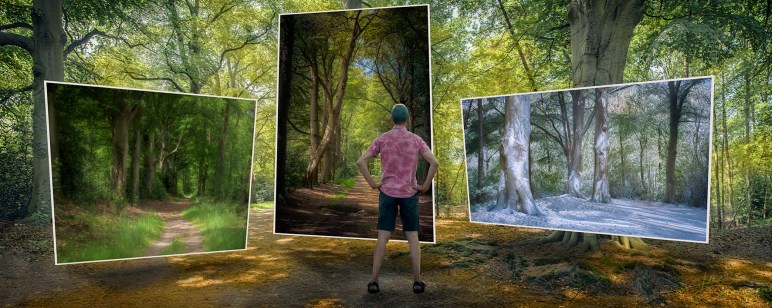
Forest paths are a recurring theme in Hockney’s work. Shall I go left or right? Sometimes Hockney’s paths are mirrored, and a choice seems to make no difference.

Photo collages or ‘joiners’ are another recurring element. Sometimes to show one subject from different perspectives, sometimes to indicate the passage of time at a glance.

To me, forest paths are the perfect metaphor for choices that life sometimes unexpectedly presents. The mind craves rational choice, but you can never see beyond the first few trees. And in the end you always end up somewhere.


In the continuum of space and history, everything is connected. Musing about a second theme for the Hockney-initiative of our local photography club, I wanted to explore the relationship between David Hockney and Vincent van Gogh. Van Gogh’s art and Hockney’s art have a lot in common. Endless inspiration from nature, the landscape, the use of brilliant colours and the expression of ‘the soul’ of a tree, a road, a hill.
It had to be olive trees. Saint Rémy is the village where Vincent loved the beautiful light. I walked through the countryside where Vincent had walked, saw the landscape he had seen. Not far from the institution where he spent a year after his mental breakdown I found an olive tree orchard. I imagined how Vincent would have seen it, and how David would have filled that view with his colours.
There it was: a symbol of van Gogh’s Provence, with a Hockney filter over it and expressed in my photographic language.
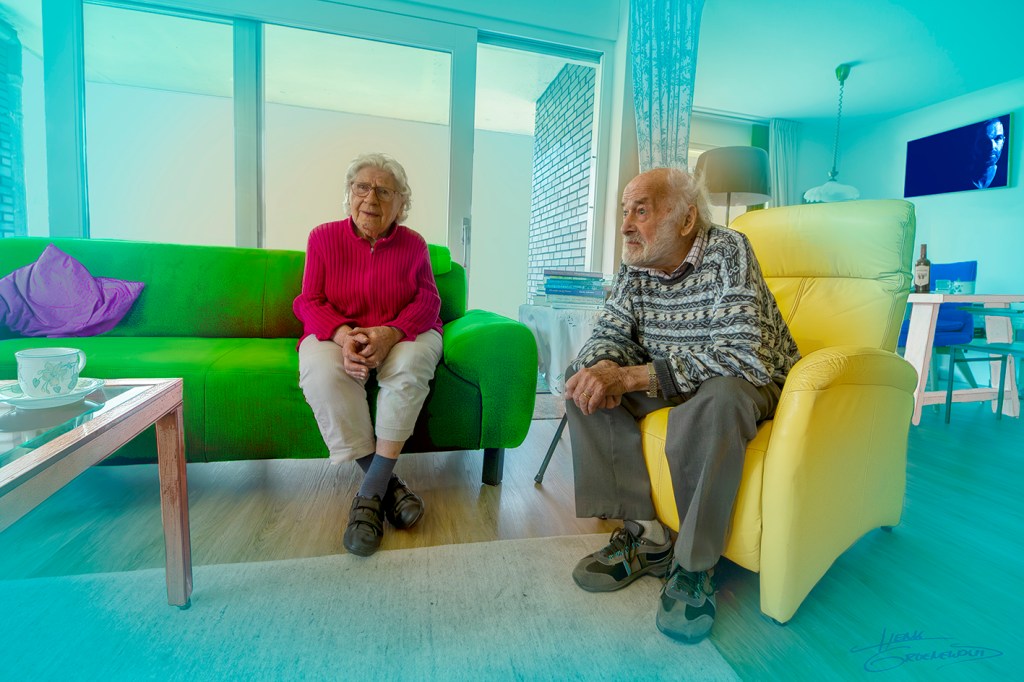
Our local photo club has a project: To create a piece of art photography inspired by David Hockney. I love these kinds of challenges, and dove into the Hockney universe. In turn, Hockney was inspired by Vincent van Gogh, so I dove into that universe as well and looked at it through the eyes of Hockney.
First piece is inspired by the double (or actually triple) portraits ‘My parents and myself’ and ‘My parents.’ I decided to look for the fragile state of existence of my father, age 95, and his sweetheart, age 93, and the relationship between the three of us in their shrinking and simplifying, schematizing world. Alzheimer has got a firm grip on him; yet the beautiful bright colours make life look wonderful


Venus guided us all the way home after the Vienna trip.
The picture from the plane resembles a bit the picture I took at home a few days ago, with Jupiter and Venus in conjunction.
More blue lately:

Angry ocean

Floating. Mesmerizing

Dusk settles

So I visited his grave in Vienna. That is to say: He was buried here at the St. Marx cemetery, but the exact location is a guess. Buried in an unmarked grave, according to the rules and habits of that time. Probably his bones were dug up after ten years to give room to other deceased. But it is nice to think that he was laid to rest here, at this memorial.

“Do you think this is it?”
Approaching the Mozart house at Domgasse 5 in Vienna, Austria. But no, the house where Mozart lived is just around the corner. The house is a museum, and you can walk in the rooms where you he and his wife lived from 1784 to 1787. He wrote the world-famous opera “Le Nozze di Figaro” there, and three of the six Haydn Quartets.

Well, this is it then. The Mozart house. Domgasse 5 in Vienna, Austria. Incredible that he has walked in the same streets, through the same door over the same stairs. With a little fantasy you can walk together.

View from his house.
This he saw when looking out of the window, thinking what the violins should play next.

The Stephansdom is just around the corner
 De Portrettenmaker