So I visited his grave in Vienna. That is to say: He was buried here at the St. Marx cemetery, but the exact location is a guess. Buried in an unmarked grave, according to the rules and habits of that time. Probably his bones were dug up after ten years to give room to other deceased. But it is nice to think that he was laid to rest here, at this memorial.
“Do you think this is it?” Approaching the Mozart house at Domgasse 5 in Vienna, Austria. But no, the house where Mozart lived is just around the corner. The house is a museum, and you can walk in the rooms where you he and his wife lived from 1784 to 1787. He wrote the world-famous opera “Le Nozze di Figaro” there, and three of the six Haydn Quartets.
Well, this is it then. The Mozart house. Domgasse 5 in Vienna, Austria. Incredible that he has walked in the same streets, through the same door over the same stairs. With a little fantasy you can walk together.
View from his house. This he saw when looking out of the window, thinking what the violins should play next.
I did it. I created Art with a capital A, and it hung in a museum. A dream come true. In the Belvedere museum in Vienna, Austria, amidst all grand names of art history.
In fact I completed the work Quasimodo of Franz West. “The title of the installation, “Quasimodo” by Franz West, can be translated as ‘the Incomplete’. Consisting of a forged iron hook and a video, this only becomes complete when the hook is hammered into a wall and objects – or in the worst case one’s self – are hung up on it at will, according to the artist…”
So I asked the attendant if I was allowed to hang up something there. He chuckled shyly, not really knowing how to react. “Oh dear… I just started working here. But I guess… if I you read what the artist says, the idea is to do just that…”
I smiled at him “I totally agree. You are so right, and I would really love to do it!”
While the other visitors watched in a bit of a shock, I hung up my camera. Like a statement: Look! I am temporarily pausing my photography as a tribute to the artist and his art. Of course by hanging up the camera I prevented myself from taking professional high quality images. Thereby strengthening the incompleteness, as I was powerless and empty handed as a photographer. I could only take a snapshot with my mobile phone. For me, this snapshot now has become a piece of art in itself, mirroring different layers over the original work.
I call it: Sicut modo. So happy with it!
Art and adoration. I went to Vienna just to see this picture. Recently I visited the Klimt experience at the Fabrique de Lumières in Amsterdam. That raised a few memories: The shop in Amsterdam so many years ago when I was a high school teenager. The cards I found there – all about Jugendstil and fairies and so. And this one that I immediately loved.
So I decided to go and see it. No reproduction can give the feeling of the real thing. I tried to take pictures of the shimmering gold and silver particles, but it’s impossible. You have to see it for yourself. In the Belvedere museum in Vienna.
Art touches one´s sense of beauty. Museums always tickle my creativity and wake up my inner muse. There is so much beauty all around! Just a glimpse out of the window tells me there is a world full of splendor waiting to be transformed into masterpieces. And after leaving the building, I feel enlightened and ready to create the most stunning art myself. View of the Naturhistorisches Museum in Vienna through the blackout screen of the Kunsthistorisches Museum Wien.
View from the Albertina museum in Vienna. Wherever you look, the world will show beauty.
It’s definitely not only the paintings that you should see in the Museum of Art History in Vienna. This is a view of the restaurant…
You just cannot not look up here. Is to too much Baroque here in the lower Belvedere?
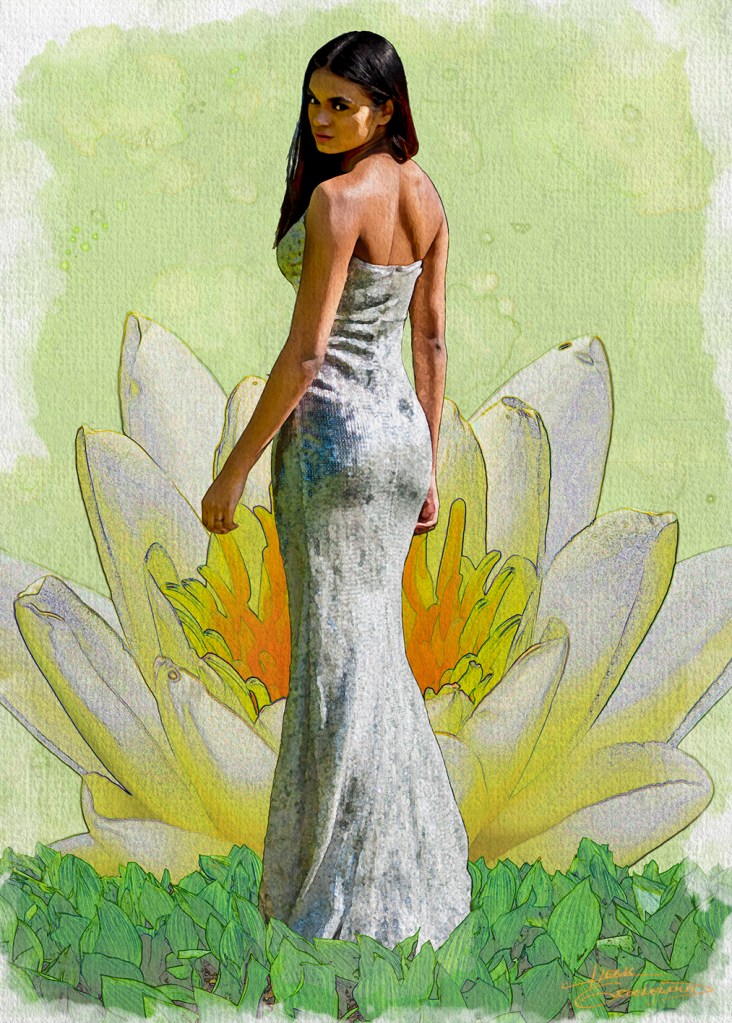
Floating away into the wonderful world of Jugenstil and Art deco. That is another way to go back in time. I love this period of more than a century ago, when books were written with words that had a life of their own and paintings offered a dreamy world where miracles were just about to happen. This portrait was taken almost two years ago, and needed the time to grow into this aquarel style
Peter Westenbrink from Utrecht is an extraordinary artist. Right now his art is flying in orbit around the globe in the International Space Station, where a box contains numerous small pieces of art, made by artists like Peter.
He asked me to make a poster of him and his art. The concept he created himself, in the style of his other works (take a look at his website www.boutkunst.nl). I merely did the handwork: the photography and the editing in Photoshop.
The objects are a reference to the first word he learned to read at school. The teacher had these wooden tablets with images and a word, like the one on the picture (which in reality is approximately 50 cm in length), and the first one was: Moon! He transformed that idea in a piece of art the size of 1 cubic centimetre, the maximum size. All art in the space station will return to earth later this year, and after that another mission awaits. The aim is to go to the very moon itself, to create the first art exhibition on the moon. Lots of arrangements still have to be made with NASA and all, but the goal is clear. You can see it hanging in the sky every day.
Addendum Just got a message from Peter: “Coincidentally, the work of art (along with 63 more) returned to Earth today (January 11). At 11:19 a.m. our time, the space capsule splashed into the Gulf of Mexico, off the coast of Florida. The attached photo was taken at the landing site, shortly before landing on 4 parachutes. You see the spacecraft falling from the sky like a fireball (heat is released due to the friction with air particles in the atmosphere).”
“What about nature in Cyprus?” you might ask. “Where are the birds, the mammals?” Let’s start with the most famous eye-catchers: the flamingos. South of Larnaca, in the salt lakes. Larges groups and easy to see.
Apart from the flamingos, the first few days I hardly saw any birds. Very disappointing. A few common stonechats (Saxicola rubicola) – don’t need to go to Cyprus to see them. This one showed up shortly after sunrise, in the early orange light.
I soon found out why I saw so few birds. They are afraid! It is quite dangerous to be beautiful. In Cyprus, people shoot. Right after my beach house, there was a small nature reserve with a salt marsh. Information panels proudly stated how special the vegetation was. There were huge signs: Nature conservation area. No Hunting! And right after these signs, you find the empty shells. One at least at every 20 meter. No wonder I didn’t see any birds. And the ones I did see – quite special, endemic species – kept well hidden and so far away, that it was pointless to try and take pictures. I do Like Cyprus, but the hunting and shooting – even in nature reserves! – is awful.
Lots of lizards though. For instance this rock agame near Aphrodite’s bath. Previously this reptile was considered a subspecies of Laudakia stellio, but DNA research showed that Cyprus truly has its own endemic species: Laudakia cypriaca.
And another lizard, Schreiber’s fringe-fingered lizard (Acanthodactylus schreiberi). Quite a lot of them – even saw one on the beach.
Lots of dragonflies as well here. For instance the globe skimmer (Pantala flavescens) – a species found all over the world, able to migrate many thousands of miles during the year.
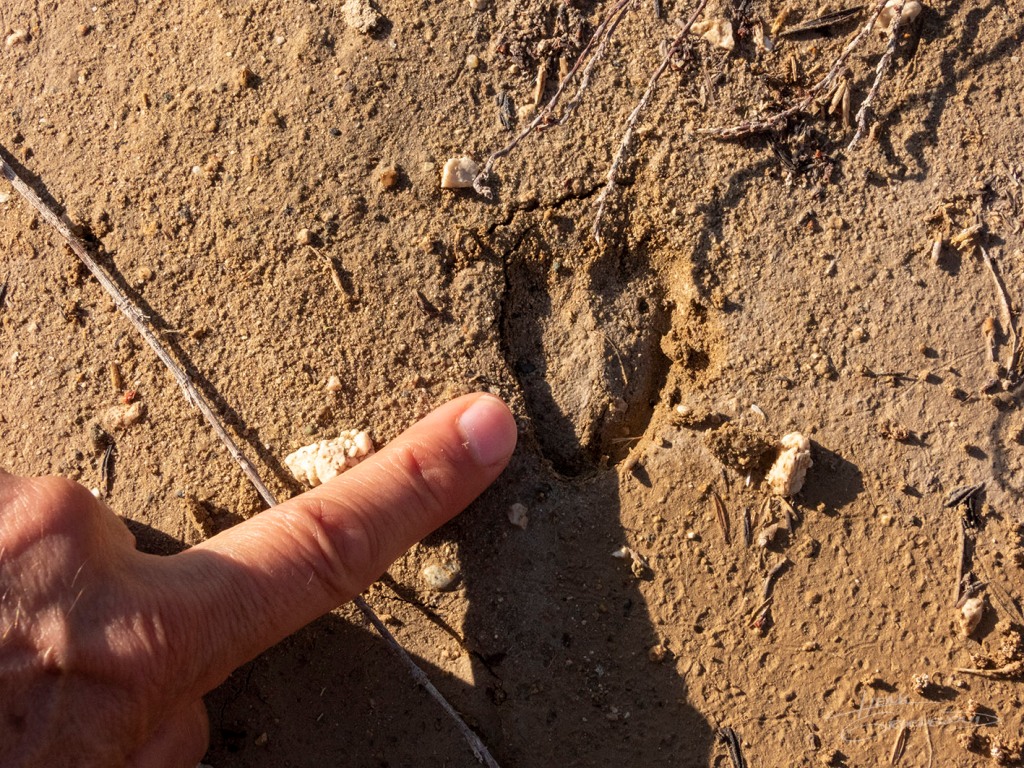
So what about the mammals in Cyprus? Of course they are present, but very, very well hidden. In between the shells, the silent witnesses of hunting in nature conservation areas, I also found fresh footprints of roe deer. The kind of deer that I can see almost daily where I live, where hunting is largely banned, but that are invisible ghosts here.
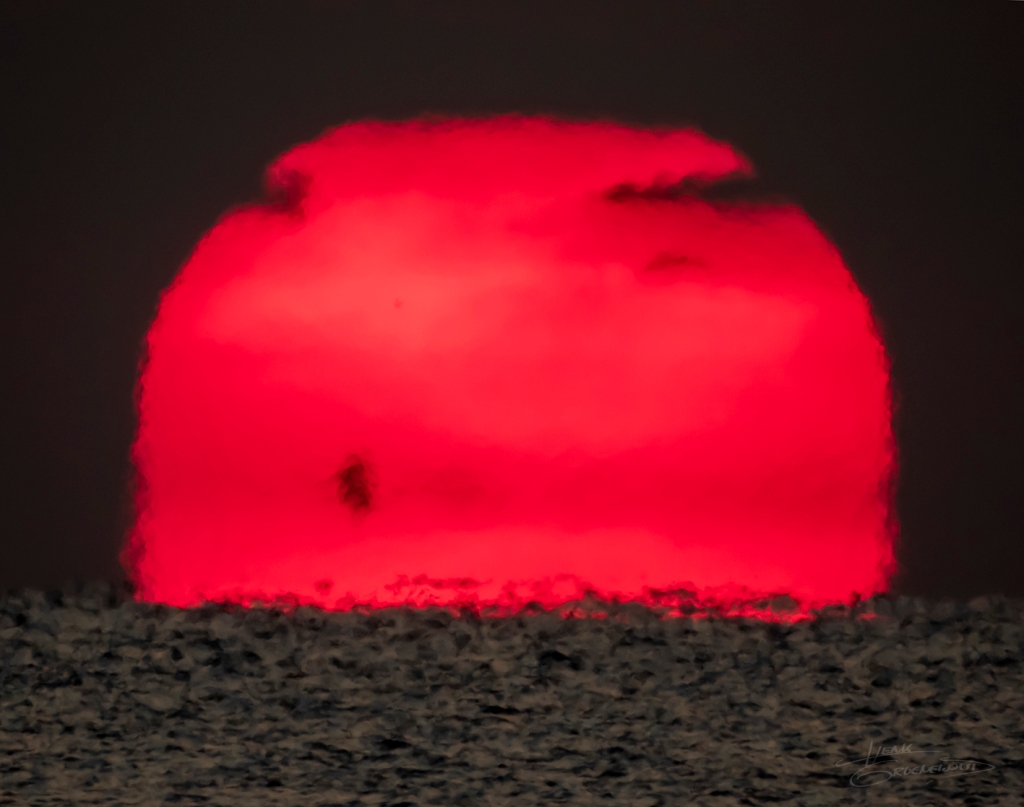
With these final remarks, I close off with some shaky air during another stunning sunrise.
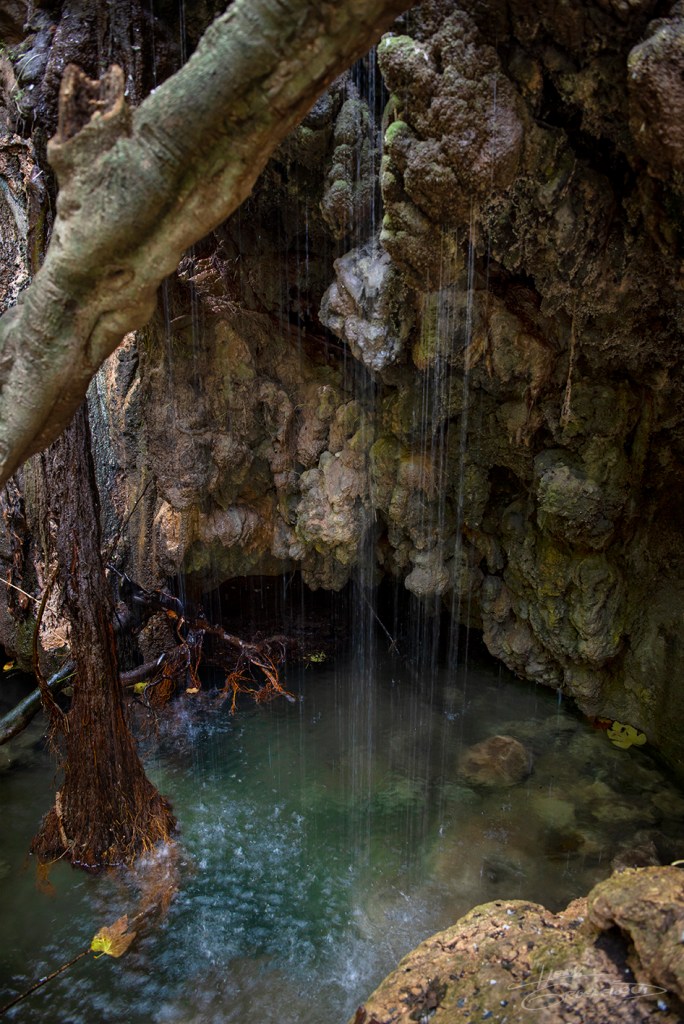
According to the legends, there is a pond near Polis in the north of Cyprus where the goddess of love and fertility and beauty used to take her bath when she was tired after a long walk in the mountains. This is the place where she met Adonis, and both of them bathed together. Not really a waterfall, just a cave where small streams of water are dripping from the rocks in a tiny pond. Not allowed to go into the water nowadays. But we have touched the water and felt it flowing through our fingers.
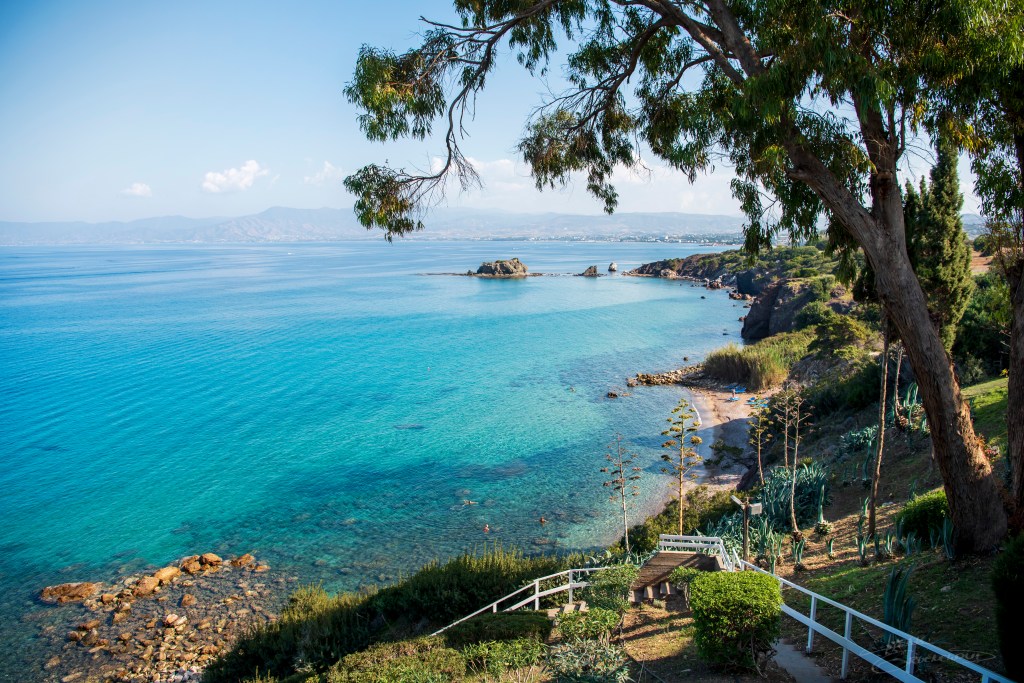
The nicest way to enter Aphrodite’s bath is through the botanical garden of Polis. Lush vegetation, lots of birds singing… no wonder the goddess loved to walk here. But then, right across the street there was a good restaurant – cleverly named ‘Aphrodite’s bath’ – with a breathtaking view over coast. An excellent moussaka and this great view – is there anything more one could wish for?
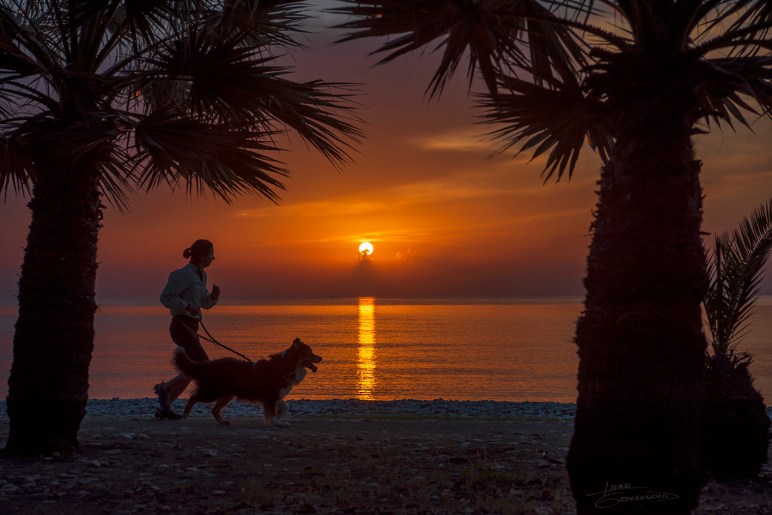
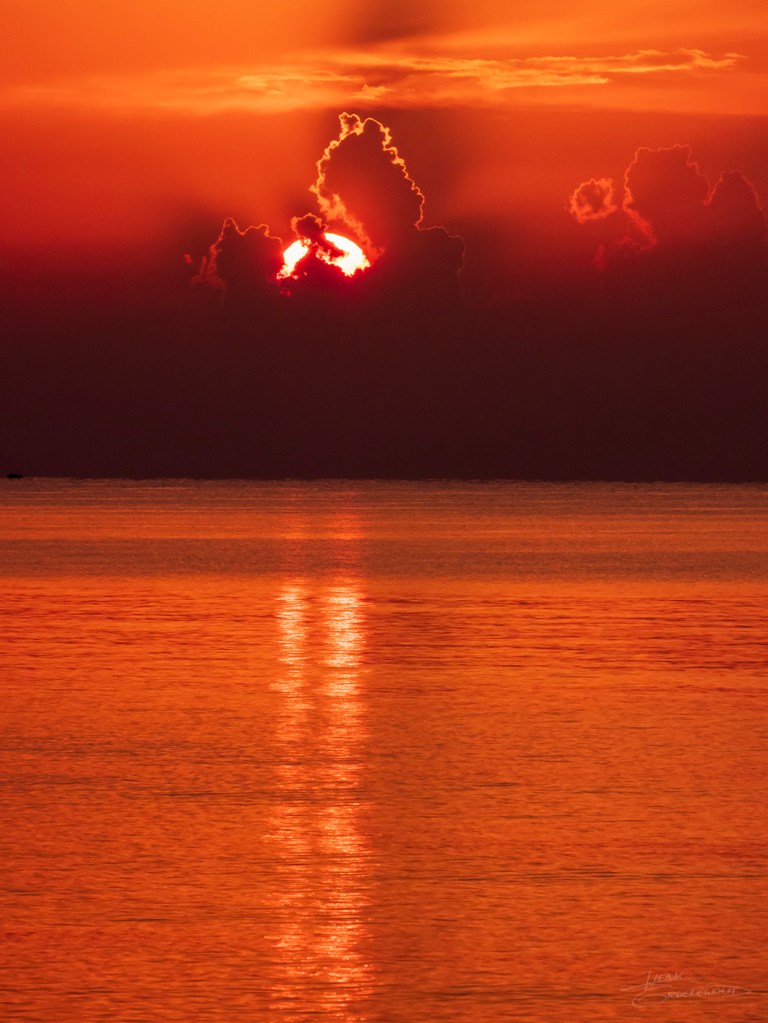
Did I mention that we had the most beautiful sunrises? Every morning I woke up at six and took my coffee to the beach. Taking a swim in the orange water, and watching the first runners passing by.
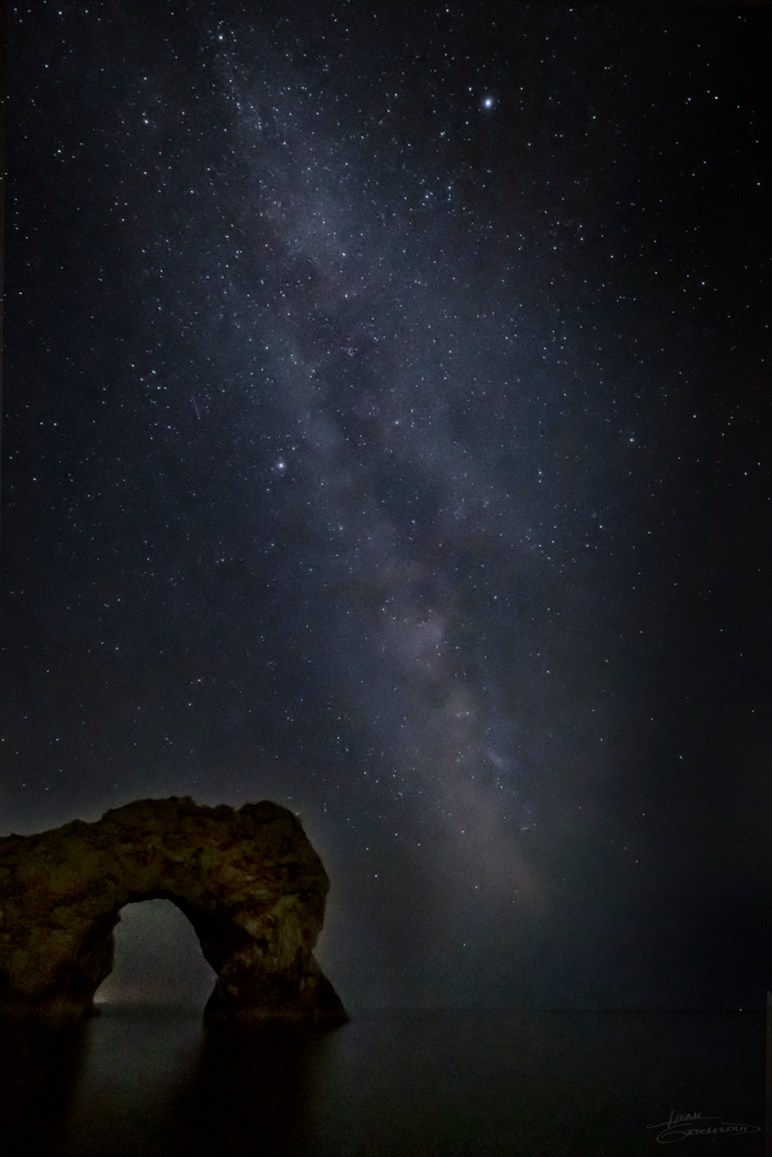
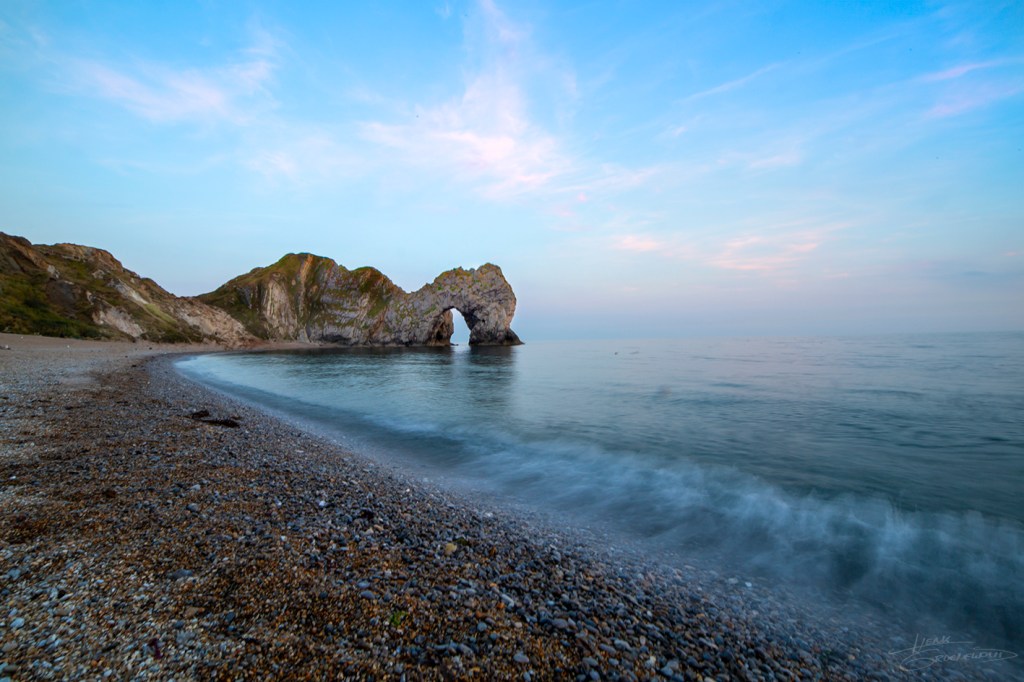
So I was in the UK this weekend, visiting my daughter. Thought it would be a good idea to enjoy the seaside and try to capture the Durdle Door rock formation with a milky way background. The weather forecast wasn´t great, but we went anyway.
At the beach I saw I had made a terrible mistake. I had taken a lightweight travel tripod from home, but at the last moment I had changed the head (the thingy that connects your tripod to the camera). I tried to assemble it, but it didn’t fit. Tripod and head were from different systems. You know that feeling when all the blood in your body seems to flush down through your toes into the sand?
There I was, thousands of kilometres flying and many hours driving from home, after sunset on a deserted beach. With just this one night, this one opportunity here. I owe my brave daughter a huge thanks that she insisted we stayed – even when it got dark and cold. And I improvised. Tried the limits of the equipment I had. For instance that 15 mm wide angle lens: Would it be possible to take pictures with a shutter speed of a whole second right out of the hand? I have shaky hands, and this lens did not have any shake reduction at all. But the wide angle saved me. You may be the judge; I think it’s good enough to present here.
The milky way was also shot out of the hand, lying down on the beach with the camera resting on the bag for support, With a full 5 seconds exposure. The result was far better than I expected.
Of course, I would have wanted pictures of the rock formation with a shutter speed of 30 seconds or more, to see details. And I would have loved to take the milky way with 20 or 30 seconds, to get more clear and profound details. And I would have wanted to use the auto – noise reduction of the camera. But it is what it is, and I am really happy with this no-tripod experiments.
The good news is: I have an incentive to once again visit this beautiful part of Dorset, with fairy tale like villages such as Lulworth and Corfe Castle village and Man O’War beach. And next time, with a complete and functional tripod.
Joke van Biesen creates art from beads, meticulously and patiently, often following her own designs. The Dutch word is ‘sieraden’, which translates into jewelry with a high-end connotation of valuable metals and crystals, or adornments with a low-end connotation of decorations. Art, let’s keep it at that.
Beadwork it’s called. I had never heard of beadwork but found out that there is a worldwide community, with art fairs that attracts visitors from many different countries. My first thought was that I would never have the patience to sit day by day stringing all these tiny beads on thin threads. And then I thought: actually there isn’t much difference with what I do: imagining an idea, focusing while working and most of all sitting many hours behind a computer screen for post-processing.
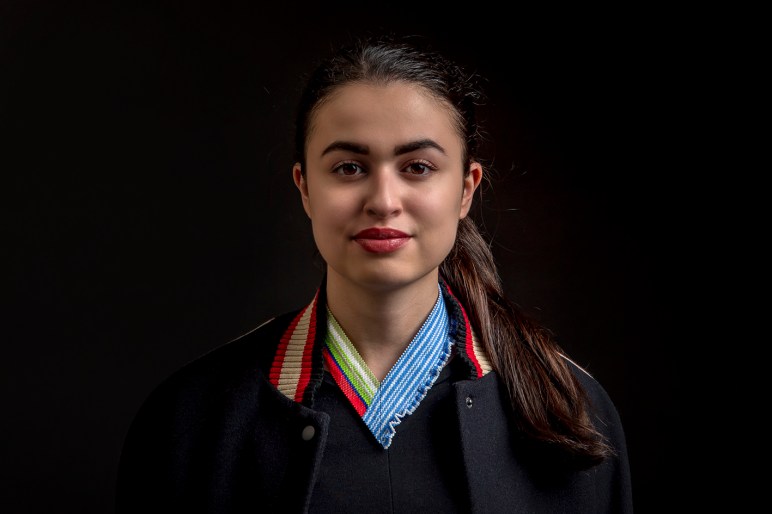
I like taking pictures of her art, this time with daughter Nora modelling (who also posed at Het meisje met het sieraad). And I’m really happy when I see the results, and how the pictures are used to share her work with that worldwide audience.







 De Portrettenmaker